Get email alerts on the Road Standards topic
No spam. Unsubscribe anytime.
Denali Borough Assembly debates codifying road-construction standards, delays vote
Summary
Assembly members spent a lengthy work session on ordinance 26-02, weighing codified design standards against an alternate, phased path for roads in new subdivisions; members cited cost, engineering requirements and emergency access concerns and postponed the ordinance for further drafting.
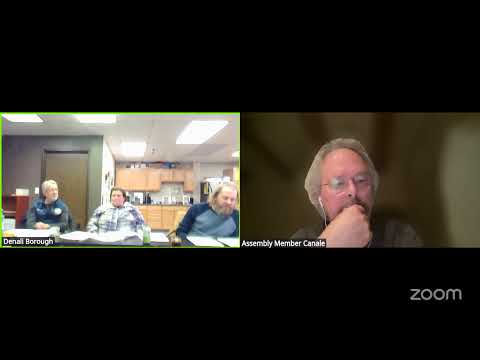
The Denali Borough Assembly spent its March 11 meeting debating proposed ordinance 26-02, a package of road-construction and alternate-design standards officials say is meant to create a consistent, long-term approach for subdivision roads and grant-funded projects. The assembly ultimately voted to postpone final action and asked staff to return with narrower, implementable minimums.
The discussion traced the measure’s origins to a fall 2023 joint planning commission-work-session and subsequent planning commission recommendations. Staff said model language in the packet was adapted from another Alaska borough’s reference tools and that the planning commission had recommended the language as an advisory reference, while the ordinance sponsor had asked for codification to ensure a ‘uniform playing field’ when private subdivisions are built and when public grant dollars are applied.
Debate focused on two competing goals: protecting public safety and long-term maintainability for roads (width, drainage, emergency turnarounds, base materials), and avoiding a codified standard so costly it would block small-scale subdivision and homebuilding. Assembly member Walt Warner warned local construction costs are high—“we pay 50% more than that here,” he said—arguing that an engineer‑stamped, codified requirement could make ordinary subdivision work unaffordable for local builders and grant applicants. Several other members said they favored retaining minimums that preserve emergency access and drainage while allowing a staged, “bare bones” pathway that improves over time.
Members also questioned enforcement: under current code the practical leverage over developers is planning‑commission approval of final plats (the assembly lacks a stand‑alone road‑construction enforcement mechanism). That reality shaped recommendations to tie standards to the subdivision approval process and to the borough’s grant review as conditions of public funding rather than impose immediate universal construction mandates on already‑built private roads.
Technical points drew attention: the packet’s D1 base requirement (often cited as 6 inches of D1 atop base material) and whether that top course or the base depth could be varied site by site; whether drainage requirements and road width should be non‑waivable minimums; and whether alternate design applicants must submit a concrete plan and schedule showing how they would upgrade the road to meet full standards over time.
Supporters of a phased approach asked staff to draft language that would identify the minimal, structurally sound “good bones” (minimum width, required fabric/geotextile, basic drainage, and an EMS turnaround) and to add a requirement that alternate designs include a plan for future upgrades if the alternate does not immediately meet the final standard. Opponents of codification urged keeping the standards as a posted reference and using grant conditions to encourage improvements rather than making the requirements legally binding.
No public testimony was offered at the hearing on ordinance 26-02. After extensive discussion the assembly voted unanimously to postpone consideration and to schedule further work-session time to produce draft ordinance language that narrows technical minimums and matches enforcement mechanisms to the borough’s existing plat and grant processes. The assembly directed staff to return with options for a two-tier or phased standard that preserves emergency access and drainage while lowering immediate cost barriers.
Next steps: the assembly will keep the topic on the next meeting’s work‑session agenda so members can consider draft codified minimums or phased‑upgrade language before taking a final vote.
AI generated
The text on this page is AI generated. Summaries, highlights, analysis, and video transcripts are all produced from the original source material.
AI can make mistakes, so if you spot one, and we will fix it for everyone.
Note: the source content is unaltered by us. Any content source we link to, be it a video, an audio recording, or a document, is presented exactly as its publisher released it. That publisher is usually a government body, sometimes an individual official or another organisation.