Get email alerts on the Solar Energy topic
No spam. Unsubscribe anytime.
Patrick County board adopts solar energy facilities ordinance after contentious public hearing
Summary
After hours of public comments and board debate, the Patrick County Board of Supervisors approved a commercial solar energy facilities ordinance March 9, 2026, drawing criticism about enforcement and legal vulnerability and support from developers for crystalline silicon panels.
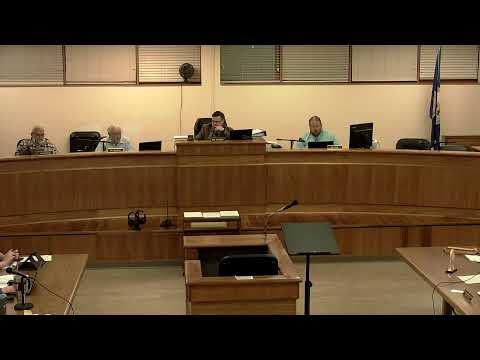
The Patrick County Board of Supervisors approved a commercial solar energy facilities ordinance March 9, 2026, following an extended public hearing in which residents, landowners and developers sparred over enforceability, environmental testing and local authority.
Residents including Norma Boozenmeer of the Smith River District told the board the draft ordinance lacked concrete testing standards and limits for contaminants. "This proposed solar document doesn't do that," Boozenmeer said, calling it "totally uninforcable as written" and urging the county to require test methods, limits and background data rather than a list of chemicals.
Other public speakers raised similar concerns about water and soil contamination and the ordinance's ability to withstand legal challenge. "It appears the board prefers unvetted AI generated verbiage to legally approved language," said Kurt Boosezmire, who argued the commission's draft had been altered and warned the county could be left exposed in court.
Representatives of the industry and ordinance supporters defended the draft. Vance AG, a planning committee backer, said the committee conducted a detailed review and cross-referenced federal, state and local rules to produce a technically and financially sound document. Andy Welch, a developer with Rick Energy, urged the board to distinguish among panel technologies and said "crystalline silicon panels" used on many local projects do not contain the heavy metals of concern and "are not water soluble; they do not leach." He asked the county to allow developers to submit written comments.
Board members debated the ordinance's readiness. Chairman Overby framed the ordinance as within the county's police power, citing Virginia Code section 15.2-1200 on measures to promote the health, safety and welfare of inhabitants and arguing the rules aim to provide accountability and protect taxpayers and natural resources. Several supervisors acknowledged the document was not perfect and described it as a "working document" that the planning commission could revise.
When the board voted, Mr. Marshall recorded a "no" vote; Mr. Kendrick and Mr. Wood voted in favor, and Chairman Overby cast his vote in favor. The motion to approve the ordinance carried.
The board and several commenters said further refinements are expected. Planning commission members and county staff were invited to continue work on definitions, enforcement mechanisms and technical testing language so the ordinance is more defensible and implementable.
What happens next: The ordinance is now adopted as the board directed; staff and the planning commission may propose revisions and the county will accept written comments as requested by developers and stakeholders.
AI generated
The text on this page is AI generated. Summaries, highlights, analysis, and video transcripts are all produced from the original source material.
AI can make mistakes, so if you spot one, and we will fix it for everyone.
Note: the source content is unaltered by us. Any content source we link to, be it a video, an audio recording, or a document, is presented exactly as its publisher released it. That publisher is usually a government body, sometimes an individual official or another organisation.