Get Full Government Meeting Transcripts, Videos, & Alerts Forever!
Get email alerts on the Water Resource Protection Overlay topic
No spam. Unsubscribe anytime.
Plan commission weighs citizen‑drafted water resource overlay, urges water‑use approach over blanket bans
Summary
Commissioners reviewed a citizen‑drafted Water Resource Protection Overlay intended to curb high‑water‑use projects (data centers, large solar farms), debated litigation risk and readability, and assigned members to rework the draft to focus on water‑use thresholds tied to the UDO.
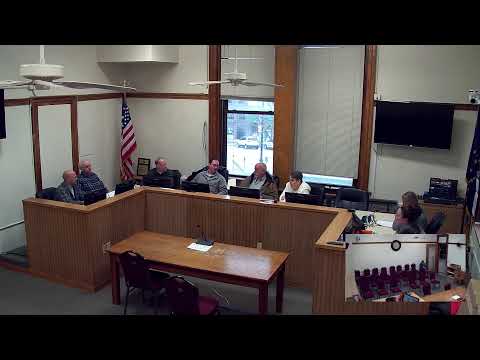
The Owen County Plan Commission spent substantial time debating a citizen‑drafted Water Resource Protection Overlay (Title 15) aimed at limiting high‑water‑use developments such as data centers and large solar farms.
Staff said the paper was prepared by a county resident and had not yet been vetted by the county attorney. Jeffrey McMillan was later identified in the record as the document’s author. Commissioners expressed sympathy with the goal of protecting county water resources but split on approach: some urged an explicit prohibition on certain large uses, while others warned that naming industries could invite costly litigation.
“We looked up the cost to build a solar farm of 100 acres and it's $40 million,” one commissioner said, arguing that deep‑pocketed corporations could litigate any broad prohibition. Multiple members recommended reframing the overlay to regulate water usage per acre or connect it directly to the Unified Development Ordinance (UDO) rather than singling out specific industries, both to improve legal defensibility and to make the standards easier for staff and the public to apply.
Discussion also highlighted Owen County’s geological variation — from limestone aquifers in the north to gypsum deposits elsewhere — and the need to tailor any standard to local hydrology and available modeling. Commissioners volunteered to review the UDO, consult EPA/state guidance, and propose simpler, county‑specific language. One commissioner said he would bring a revised draft to the next session; staff said attorney review would be needed before forwarding any recommendation to the commissioners.
Separately, applicants for a new phase of the Four Oaks subdivision (OC Development) introduced phase three and said exterior standards and HOA covenants would remain the same; commissioners asked technical questions about sewer connections and minimum home sizes.
Next steps: commissioners will rework the overlay language to focus on water‑use metrics, check relevant guidance and modeling options, and return with a simplified draft for further discussion and potential recommendation to the county commissioners.