Get Full Government Meeting Transcripts, Videos, & Alerts Forever!
Get email alerts on the Medicaid Eligibility topic
No spam. Unsubscribe anytime.
Virginia officials: HR1 will force six‑month Medicaid renewals, tight fall deadline and major operational changes
Summary
State officials told the House Health and Human Services Committee that federal HR1 will require six‑month redeterminations for much of Virginia's Medicaid expansion population, create new work/community engagement rules for a subset of adults, and impose an operational deadline that state staff called ‘very tight.’ Local DSS staffing and technology funding remain unresolved in the governor's introduced budget.
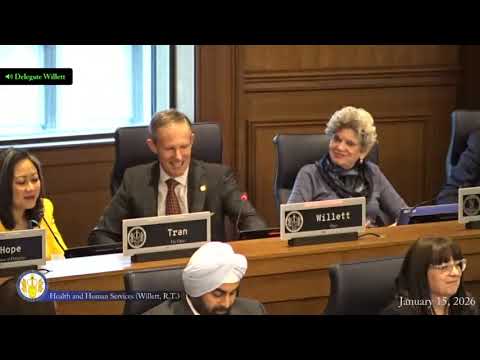
Jeff Lonardi, a state Medicaid official, told the Virginia House Health and Human Services Committee that federal HR1 will require states to resume more frequent eligibility checks and add work and community engagement rules for some adults on the expansion program. He said the law will require six‑month redeterminations for roughly the 500,000 people currently in the Medicaid expansion population and that parts of the law must be operational by the end of the year, with outreach and systems ready by mid‑September.
"The timeline particularly for Medicaid eligibility changes is very, very tight," Lonardi said, framing the redetermination and work‑requirement rollout as an "heavy operational lift." He said the state team is already planning modular system changes that would automate verification where possible and reduce the burden on local eligibility workers.
Lonardi listed several concrete policy changes in HR1: a new definition that will remove some immigration statuses from full‑benefit Medicaid effective Oct. 1; a process to reduce duplicate (concurrent) enrollment across states by notifying beneficiaries and asking them to confirm residence; a shortening of retroactive coverage for expansion adults from three months to one month (two months for children/mothers in CHIP); and longer‑term program‑integrity measurements that could affect federal match in future cycles.
Several members pressed Lonardi on likely effects. Delegate Waxman, who represents a rural medically underserved district, asked whether hospital and pharmacy access will suffer if adults lose coverage. Lonardi said the state has produced estimates of reduced supplemental payments to some hospitals that will phase in over 13 years and that the team will follow up with more detailed provider‑impact forecasts.
Committee members also asked about error‑rate monitoring (PERM) and whether flexible state policies such as self‑attestation or medically frail exemptions could count against Virginia in federal reviews. Lonardi said federal reviews measure whether the state implemented its approved policies accurately; if Virginia's policies are approved by CMS, the state will be measured against those policies.
On resources, local Department of Social Services (DSS) leadership reported the governor's introduced budget does not include additional funding specifically for local DSS staff to carry out the Medicaid implementation work; it includes other administrative shifts for SNAP. Lonardi and DSS staff said the team is seeking technology and staffing strategies that minimize local burdens—such as a central modular verification system and expanded use of Cover Virginia’s centralized unit for single‑program renewals—but emphasized that investments in people and systems are required.
Lonardi urged broad, multi‑channel communication and partnership with community groups to make the rules and exemptions clear to consumers. He said states await formal CMS guidance expected in June and that the federal agency has emphasized states must be operationally ready by the statutory deadlines. Lonardi added that CMS has signaled limited enforcement flexibility in year one but still expects operational readiness.
The committee did not take formal votes. Members said they will press for additional budget details and followups on projected caseload effects, rural provider impacts and how the state plans to connect people subject to work or community engagement rules to workforce and training programs.
The committee will continue oversight of implementation as guidance, budget actions and system designs develop.