Get Full Government Meeting Transcripts, Videos, & Alerts Forever!
Get email alerts on the Estate Attorneys Lien topic
No spam. Unsubscribe anytime.
Court of Appeals hears dispute over attorney’s lien and whether probate court had exclusive jurisdiction
Summary
In an oral argument over TR Spencer’s attorney’s lien on estate property, the Court of Appeals heard competing claims about jurisdiction, standing and issue preclusion after a probate judge and a collateral district court reached contrary rulings. Counsel disagreed over whether the probate process is the exclusive route for resolving fee disputes.
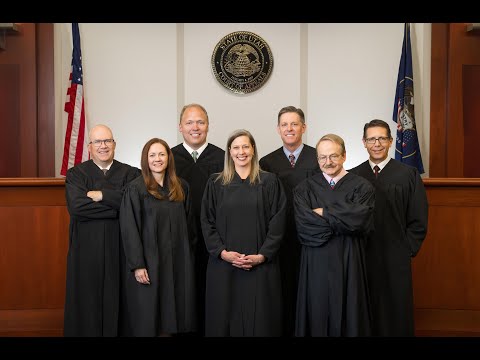
The Utah Court of Appeals on Wednesday heard arguments in an appeal over whether an attorney properly recorded an attorney’s lien on property of the estate of Dorene Joe Carrey and whether a collateral district-court action improperly relitigated issues already before the probate court.
Cameron Sabin, representing appellants TR Spencer and Terry Spencer, told the three-judge panel that the collateral court lacked subject‑matter jurisdiction and erred by granting judgment on the pleadings in a way unfavorable to his clients. Sabin said the probate case pending before Judge Pettit already encompassed the question of attorney fees and that the later district-court case duplicated arguments Judge Pettit had resolved. “The collateral court lacked subject matter jurisdiction,” Sabin argued, framing the appeal around capacity, preclusion and statutory interpretation.
Appellee counsel Brett Hastings said the district court’s ruling that the lien was wrongful should be affirmed. Hastings told the court that the attorney‑lien statute applies to the property of a client and that, in his view, the estate was never the attorney’s client; he urged the panel to treat the probate procedures for awarding fees as the proper route to payment. “We will ask the court to affirm in full Judge Pettit’s order that the lien was wrongful,” Hastings said.
Judges pressed both sides on a series of legal questions: whether an estate is a legal entity for standing or capacity purposes, whether the personal representative (PR) is the proper real party in interest, and whether earlier probate findings are sufficiently final and factually complete to support issue preclusion. Counsel differed on whether admissions revealed in the district‑court record — including that the estate was not the attorney’s client — changed the preclusion calculus.
The panel also debated how to interpret the attorney‑lien statute against the probate code’s fee‑award procedures. Counsel and judges discussed practical consequences: if an attorney for a PR may not use the statutory lien while the probate process offers an alternative route to payment, an unpaid lawyer could be left without an immediate enforcement tool pending probate adjudication; conversely, allowing liens on estate property without probate oversight could undermine statutory probate procedures.
The court took the matter under advisement and said it would issue a written decision in due course.
What happens next: The Court of Appeals will circulate a written opinion resolving whether the collateral court’s judgment should be upheld, reversed or remanded for further proceedings in light of the parties’ jurisdiction, preclusion and statutory‑interpretation arguments.