Get Full Government Meeting Transcripts, Videos, & Alerts Forever!
Get email alerts on the Public Safety Dispatch topic
No spam. Unsubscribe anytime.
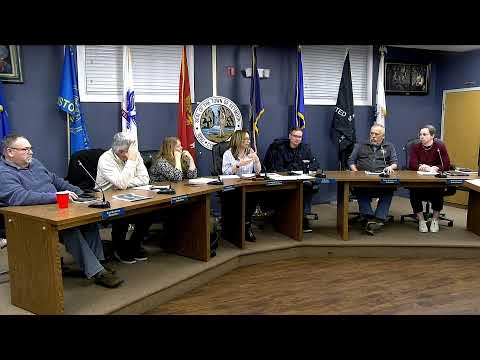
Seymour board authorizes nonbinding letter of intent to explore moving police dispatch to regional center
Summary
The Board of Selectpersons voted to authorize a nonbinding letter of intent to begin due diligence on moving Seymour Police dispatch to the Northwest Community Public Safety Communication Center; the move would be phased, with software integration and a proposed one-year timeline to a possible 2027 go‑live.
The Board of Selectpersons authorized a nonbinding letter of intent to begin planning a transition of Seymour Police Department dispatch services to the Northwest Community Public Safety Communication Center, citing possible cost savings, redundancy and specialized staffing.
The board voted to let the chief sign a letter of intent after a lengthy discussion about timeline, costs and public-safety tradeoffs. The motion to authorize the letter was made by Bob and seconded by Al; the board approved the motion.
The chief and staff framed the proposal as largely driven by software integration and training. The chief said a realistic migration would take about a year after the parties complete technical work and training; the meeting included repeated question-and-answer exchanges about whether there would be any gap in 911 coverage and who would bear ongoing costs.
Dave Martin, executive director of Northwest, told the board the center uses a per-capita billing model and gave Seymour an example figure: "The per capita is $27 per resident." Martin said Northwest typically works on three-year contracts with renewals and that adding members spreads fixed infrastructure costs across the region. He invited board members to tour the center to see how a so-called "dark" station operates and to observe remote camera and access protocols.
Board members pressed for financial specifics before final commitment. Members asked for: a) a clear statement of next‑fiscal‑year costs and how any initial-state subsidy would phase out; b) a comparison of long‑term costs for hiring civilian dispatchers or training officers as alternatives; and c) the software and migration risk profile. The chief confirmed the state coordinates 911 trunk and switchovers to avoid gaps in 911 coverage and that a nonbinding letter of intent would preserve flexibility while allowing the town to collect detailed cost and migration data.
Supporters argued consolidation reduces liability and provides specialized, full‑time dispatch expertise; skeptics emphasized the perception issue of a "dark" station and wanted concrete multi‑year maintenance and contract-cost estimates. The board asked staff to return with a concise cost summary and a migration timeline as Northwest and town staff proceed to diligence. The board approved the letter-of-intent authorization to begin those next steps.
What happens next: staff and Northwest will conduct technical due diligence, produce a one-page cost/benefit summary for the board, and schedule facility visits to Northwest to let members evaluate the remote "dark station" operations.