Get Full Government Meeting Transcripts, Videos, & Alerts Forever!
Get email alerts on the Lease Contracts topic
No spam. Unsubscribe anytime.
Utah Court of Appeals hears dispute over lease surrender, guaranty language and damage disclosures in Park Avenue v. Miller
Summary
At oral argument in Park Avenue v. Miller, counsel debated whether an old ‘surrender-and-acceptance’ doctrine or express lease and guaranty terms should control post‑termination damages, whether a guarantor promised to cover statutory treble damages, and whether Park Avenue’s disclosures adequately computed damages (noting a $243,978.26 figure and a $30,000 monthly base rent). The court took the matter under advisement.
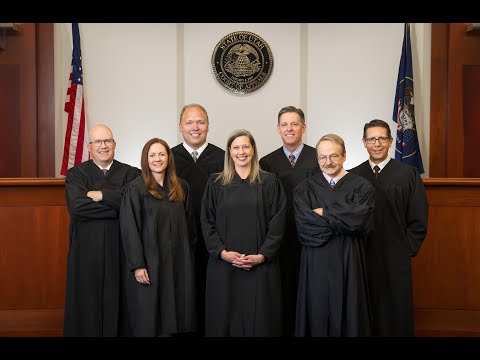
The Utah Court of Appeals heard argument in Park Avenue (628 Park Avenue) v. Miller, a dispute about which legal rules govern damages after a tenant vacates leased premises and whether the tenant’s guarantor can be held responsible for statutorily treble damages.
Appellant counsel Troy Ber told the three‑judge panel that his team raised three issues on appeal and would first address “surrender and acceptance” and the trebling question before turning to disclosure issues. Ber said the modern starting point is that parties to sophisticated commercial leases may contract around ancient common‑law doctrines and that section 1403 of the lease expressly lists categories of damages that “survive” termination. “When parties have said that certain categories of damages survive post‑termination, a common‑law doctrine, unless void for public policy, cannot override the parties,” Ber said.
A judge pressed counsel to explain the practical divide between a lease that is merely terminated (possession ends) and one that is rescinded (contract obligations extinguished). Ber said the documents used the word “terminate” in different senses but argued the operative contract language — and a guaranty that accompanies the lease — should be harmonized so that liabilities “incurred” under the lease include recoverable statutory or treble damages.
Opposing counsel disputed the sufficiency of Park Avenue’s disclosures. The appellee argued that the plaintiff’s initial disclosures included a precise figure (listed in the record as $243,978.26) and that case law requires a party that provides a completed computation to show the math or point to an attached document that yields the number. Counsel cited a string of Utah decisions addressing when a methodology versus an actual computation suffices in disclosure practice and maintained that Park Avenue’s supplemental disclosures and allocation of payments raised additional factual questions about offsets (including a $60,000 deposit) and how the landlord applied payments across competing categories.
Counsel and the panel debated specific pleading and disclosure entries — including references to paragraphs of an amended complaint and addenda the parties used to argue what was ‘‘adequately disclosed’’ (past unpaid rent for five months was not disputed, counsel said) and what required further proof (taxes, utilities, and some post‑termination interest calculations). The court asked whether the guaranty’s language that the guarantor’s liability is “primary” and waives notice or offset defenses changes the disclosure analysis; counsel for Park Avenue said that clause and the lease’s cross‑references support liability for the guarantor beyond current unpaid rent.
Neither counsel sought immediate final relief from the panel at argument. After extended questioning, the panel thanked counsel, took the matter under advisement and moved to the next case.
The court’s decision will determine whether ancient surrender‑and‑acceptance principles can be displaced by modern contractual drafting and whether a guarantor’s promise can be read to include statutory treble penalties absent explicit statutory exclusion. The appellate ruling also will clarify how detailed a plaintiff’s damages computation must be in initial disclosures when a precise dollar figure is asserted.
The case number is 20240378 and the matter remains under advisement.