Get Full Government Meeting Transcripts, Videos, & Alerts Forever!
Get email alerts on the Safety Act topic
No spam. Unsubscribe anytime.
Will County state’s attorney says Illinois 'Safety Act' was rushed, overturned and amended — but enforcement gaps remain
Summary
In a Profiles interview in Joliet, Will County State’s Attorney Jim Glasco described how a rushed 2021 Safety Act created a 90-day trial deadline and other limits that prompted a multistate legal response and a 300‑page amendment — but he says loopholes remain for burglary, fentanyl and repeat DUI cases.
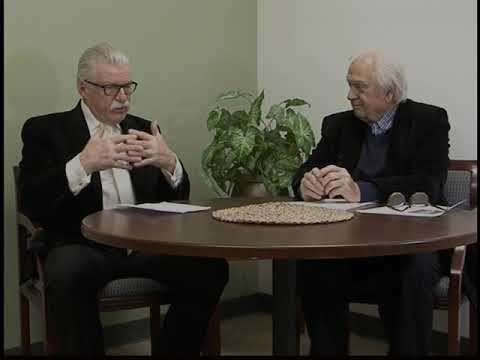
Will County State’s Attorney Jim Glasco told Profiles in Joliet that the original Illinois Safety Act, advanced in the early hours of 2021, was rushed through the legislature and contained provisions that hamstrung prosecutors and judges.
"They put in a requirement that someone be brought to trial within 90 days," Glasco said, describing a provision that he and other prosecutors viewed as unrealistic for complicated cases. "We begged them, please, will you listen to us?" He said the provision limited judges' authority — including the ability to issue warrants in some circumstances — and risked letting serious offenders avoid detention.
Glasco said his office assembled a team and persuaded 64 other state's attorneys to join a legal challenge. A favorable circuit court decision, he said, led legislators to negotiate amendments: "not a perfect solution but a 300‑page amendment was gotten from that and that basically saved us from what was going to be an uncontrollable situation," he told the program.
Why it matters: Glasco said the amendment restored a workable timeline — he says courts now use a 120‑day framework with continuances allowed for specific circumstances such as DNA testing — but left what he describes as enforcement anomalies. He gave examples in the interview: under current law burglaries of detached garages can be non‑detainable even for defendants with serious prior records, some fentanyl possession thresholds are not detainable, and aggravated DUI detention thresholds can require multiple prior convictions before a detention is permitted.
Illustrations from cases: Glasco recounted an investigator who arrested a man identified on the show as Harry Flowers and found him back on the street days later. "Harry's been arrested 37 times," Glasco said, describing how current detention rules required a subsequent arrest before the defendant could be detained. On fentanyl he warned of the drug's lethality: "If I've got 4.9 grams of fentanyl, I can kill 2,500 people," a comment Glasco used to emphasize the public‑safety stakes.
Legislative context and defeated proposals: Glasco told the host that separate 2024 legislation would have limited traffic stops (for example, banning stops for vehicles with no plates or certain window tints) and that proposal failed at first reading after widespread concern. "The bill died," he said, adding that the proposal showed how some drafters had pushed too far on enforcement restrictions.
Next steps: Glasco said the State's Attorneys Association will continue talking with the legislature to propose precise fixes. "I'm hoping that we can all sit down and cooler heads will prevail," he told the program, urging restoration of judicial discretion to address the examples he raised.
The interview closed with Glasco saying the amended Safety Act has allowed offices to function but that further, targeted legislative changes are needed to close the public‑safety gaps he described.