Get Full Government Meeting Transcripts, Videos, & Alerts Forever!
Get email alerts on the Mental Health topic
No spam. Unsubscribe anytime.
Town of Northborough webinar offers practical steps to manage stress, anxiety and burnout
Summary
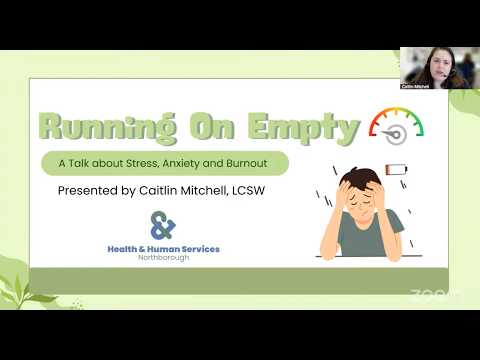
Caitlyn Mitchell, a social worker with the Town of Northborough Health and Human Services Department, led a May webinar—titled “Running on Empty”—offering definitions, warning signs and practical strategies for stress, anxiety and burnout and listing local 24/7 resources including 988 and the Advocates mobile crisis team.
Caitlyn Mitchell, a social worker with the Town of Northborough Health and Human Services Department, presented “Running on Empty” during the Town of Northborough’s May webinar to outline how stress and anxiety can escalate into burnout and where residents can find help.
Mitchell opened by citing national survey findings, saying the majority of Americans report rising stress in recent years and “around 75% reporting physical and emotional symptoms related to stress.” She described stress as a physiological and psychological response that can be motivating when short‑lived but harmful when chronic.
The presentation defined anxiety disorders and burnout and explained the difference between the two. “Anxiety can include intense, excessive, persistent worries and fears,” Mitchell said, and she listed common symptoms—racing heart, shortness of breath, trembling, sleep problems and difficulty concentrating. On burnout, she defined it as “emotional, physical and mental exhaustion caused by prolonged or excessive stress” and stressed it can affect people in many roles, not only employees.
Mitchell emphasized that burnout and depression can appear similar but are not identical: depression is a clinical diagnosis with formal criteria, she said, while burnout is more situational and often improves with rest or a change in demands. She advised anyone whose symptoms are persistent or worsening, or who develops unhealthy coping like substance use, to seek professional help.
The bulk of the talk offered practical coping strategies. For stress management Mitchell recommended relaxation techniques (deep breathing, meditation), time management and prioritization, physical activity and strengthening social connections. For anxiety she highlighted cognitive‑behavioral strategies—identifying catastrophic thought patterns—and grounding techniques such as the 5‑4‑3‑2‑1 sensory method and brief cold‑water splashes to interrupt acute episodes.
On preventing and recovering from burnout, Mitchell urged setting boundaries and taking deliberate breaks: “Boundaries can develop over time in different ways,” she said, noting small adjustments—like setting aside a short breather at the end of the day—can help. She encouraged reconnecting with what brings meaning to a role and reaching out for supports when needed.
Mitchell also listed local and national resources: the national suicide and crisis lifeline (988) and the Massachusetts behavioral health line (both described as 24/7); Advocates’ mobile crisis team, which she said can respond in homes, schools and community settings; interface helplines that help residents access therapists; and the National Alliance on Mental Illness (NAMI) helpline. The presentation included direction to the Town of Northborough’s Health and Human Services pages (town website) for event registration and further information.
In follow‑up comments, host Liz Nolan noted that students experience seasonal burnout around exams and caregivers juggling children, work and older relatives often struggle to set boundaries—points Mitchell agreed can require tailored supports. The webinar was recorded and will be posted on the town’s YouTube channel; the department announced a June 9 webinar on ticks and mosquitoes and summer safety tips.
The session combined clinical context with brief, practical techniques and a list of crisis and referral resources for residents; attendees were urged to seek help if symptoms persist or intensify.