Get Full Government Meeting Transcripts, Videos, & Alerts Forever!
Get email alerts on the Traffic Enforcement topic
No spam. Unsubscribe anytime.
Cleveland safety panel presses police on sharp drop in traffic citations
Summary
At a Cleveland City Council public-safety meeting, council members pressed police leaders on a marked decline in uniform traffic tickets, requested ward-level enforcement data and staffing details, and discussed non‑enforcement remedies and legal limits on pursuits.
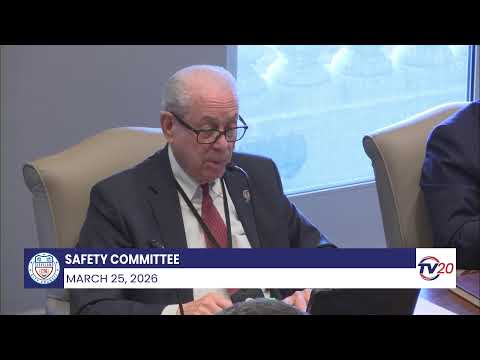
Cleveland — Cleveland’s Public Safety Committee spent its meeting reporting and pressing for answers after city officials outlined a sharp decline in uniform traffic citations and described how enforcement is being carried out.
Safety Director told the committee that uniform traffic tickets have fallen substantially since 2016, citing department statistics the director said show nearly 9,000 tickets in 2016 compared with about 3,405 in 2025. The numbers prompted council members to demand detailed, ward‑level breakdowns of stops, citations, crashes and other enforcement interventions.
Council members said the decline shows up in public complaints about speeding, drivers ignoring school‑zone restrictions and rising hit‑and‑run counts. Councilman Star asked for a three‑year ward‑by‑ward data set and a quarterly reporting commitment so the council can identify hotspot locations and target resources. ‘‘Can you provide a clear explanation for this drop and identify who’s accountable for ensuring traffic enforcement is prioritized moving forward?’’ Star asked through the chair.
Deputy Chief Sam Morris said the department runs regular traffic details with partner agencies and estimated the division conducted roughly 40 detail operations with the Ohio State Patrol last year. ‘‘The traffic unit picks one district every week per day. They’ll go out to that district,’’ Morris said, describing weekly rotations and a summer program of targeted enforcement.
Officials also described the city’s mix of responses beyond citations: the Bureau of Traffic runs specialized enforcement details, district commanders can assign additional officers for local needs, and city planners and Vision Zero staff are pursuing engineering changes such as speed tables and roadway redesigns to reduce speeds.
‘‘We’re not in the business of revenue generating. We’re in the business of change of behavior,’’ the Safety Director said, stressing enforcement is intended to improve safety rather than raise fines.
Council members pressed for precise staffing numbers. Department leaders said there are currently 22 officers assigned to the Bureau of Traffic and two district traffic cars per police district (10 district cars across five districts), and that every sworn officer has the authority to take enforcement action when they witness violations. The director said the division’s current sworn staffing is about 1,240 officers (including recruits) with 64 in the academy; the department is budgeted for 1,350 sworn positions.
Members also raised policy and legal limits. Officials reiterated the department’s pursuit policy restricts vehicle pursuits to violent felonies and certain serious offenses, and explained that if a vehicle flees officers the department typically uses plate information and summonses rather than a pursuit. Council members asked whether changes to municipal law or new administrative tools (towing/booting within 48 hours when a plate is known) could produce stronger follow‑up for drivers who flee traffic stops.
Several council members urged use of technology—dash and body cameras, camera enforcement in school zones or on buses, and better use of the city’s traffic camera network—to augment enforcement. Officials said dash and body cameras are in frontline vehicles and that they use data to deploy resources to high‑accident intersections, while noting factors such as removed front plates, plate covers and ‘‘ways’’ apps that warn drivers of enforcement complicate detection.
The meeting also included concerns about equity and enforcement outcomes. Councilman Conwell said municipal‑court caseloads reflect racial disparities and warned that traffic enforcement can create barriers to employment if not applied equitably. The Safety Director pointed to the city’s consent‑decree oversight (Civilian Police Commission, DOJ monitoring and court review), body/dash cameras and internal accountability processes as protections and said the department aims for constitutional, unbiased policing.
Officials agreed to provide the council with the requested data and materials, including ward and district enforcement counts, staffing and cost breakdowns for traffic enforcement, a written description of the Bureau of Traffic’s functions, recent sobriety‑checkpoint counts and summaries of traffic‑detail activities. The committee closed with the chair saying staff will follow up if residents’ concerns are not addressed.
The committee adjourned after officials committed to deliver the information requested by council members.