Get Full Government Meeting Transcripts, Videos, & Alerts Forever!
Get email alerts on the Cleanup After Diversionary Devices topic
No spam. Unsubscribe anytime.
Committee advances bill to set cleanup standards after police use of diversionary devices
Summary
The Commerce Finance and Policy Committee on March 12 advanced House File 41‑33 to the General Register after testimony from Collin Hartman about months‑long disputes with insurers and contractors over cleaning tear gas and other diversionary‑device residue. The bill, as amended, defines "industrial hygienist," substitutes "diversionary devices," and lets homeowners choose a contractor and industrial hygienist.
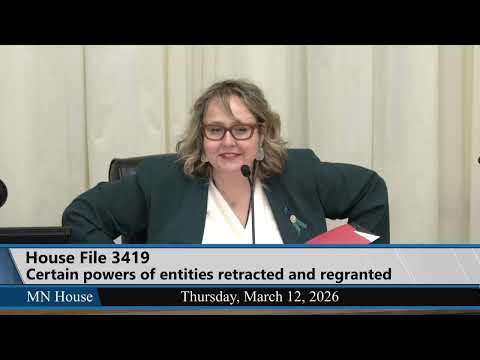
Representative Mueller’s House File 41‑33 was advanced to the General Register by the Minnesota House Commerce Finance and Policy Committee on March 12 after a public witness described years of difficulty getting a home properly decontaminated following law‑enforcement use of chemical irritants.
Representative Mueller explained the author's amendment adopted by the committee: it defines the term "industrial hygienist" used in the bill, replaces the phrase "destruction devices" with "diversionary devices," and allows a homeowner to choose a contractor and an industrial hygienist to assess cleanup needs.
Collin Hartman, whose parents’ home was treated with multiple canisters of chemical irritants, testified that initial insurer guidance amounted to superficial cleaning but did not follow industry decontamination standards. Hartman said independent testing and work by an industrial hygienist showed contamination in carpets, furniture, walls and ventilation systems and that proper remediation required neutralizing chemicals, HEPA filtration and protective gear. He told the committee, "I'm here today because I don't want future victims to have to become experts in diversionary devices, chemical testing or insurance law just to make their homes safe again."
Hartman described months of negotiation with insurers and contractors, additional testing paid for by his family and the emotional strain of delays. Committee members noted the family had resources and legal help that many victims would not, and they said the bill aims to create clearer cleanup standards and stronger expectations for insurers.
Members also discussed a separate public safety proposal to require law enforcement to notify homeowners about which chemicals were used so cleanup can begin promptly. Representative Mueller said she will pursue additional amendments if stakeholders identify needed changes.
Representative Mueller moved the bill, as amended, to the General Register; the committee approved the motion by voice vote.
Next steps: HF 41‑33 now goes to the General Register for further House consideration. The committee record includes Hartman’s written testimony and the committee indicated it may refine language in follow‑up amendments.