Get Full Government Meeting Transcripts, Videos, & Alerts Forever!
Get email alerts on the School Bus Safety topic
No spam. Unsubscribe anytime.
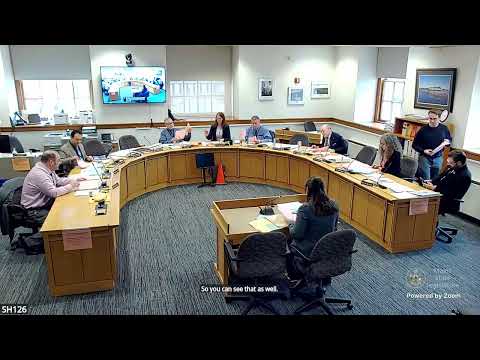
Maine transportation committee narrows school-bus crossing-arm exemptions, creates safety commission
Summary
Lawmakers debated requiring school buses statewide to be equipped with—and in almost all cases to deploy—crossing arms, shifted penalties to traffic infractions, set a Jan. 1, 2027 retrofit target for equipment, and directed a new permanent commission to report by Feb. 1, 2027.
The Joint Standing Committee on Transportation spent most of its meeting debating LD 2159, an amendment that would require school buses in Maine to be equipped with crossing arms and generally require their use when students are boarding or discharging.
Analysts from the Office of Policy and Legal Analysis presented a sponsor amendment that would (1) require crossing arms on all buses, (2) prohibit a bus from being in motion while a door is open, (3) require activation and use of the red signal/stop arm and crossing arm while receiving or discharging passengers, and (4) allow disabling the crossing arm only under narrow conditions such as certain parking-area configurations or when deployment would cause greater harm, the analyst said.
"There should never be an exception to the arm being down if a student is crossing in front of the bus," sponsor Valley Guyger told the committee, urging strict limits on any exemption. Several committee members expressed the same objective: make use the default and keep exceptions narrow so drivers do not treat the rule as optional.
Members argued through specific drafting choices. Representative Perry and others proposed language that would permit disabling the arm only when the bus is in a defined parking area and the driver can "demonstrate" that use would cause greater harm or damage. Opponents warned that overly prescriptive rules could hamper bus drivers' professional judgment in complex parking or field-trip scenarios; Representative Blake said drivers "are entrusted with all the children of the state" and need discretion in unusual situations.
The amendment also reclassifies violations. The bill as printed had classified some new provisions as a Class E crime; the committee was presented a change making violations traffic infractions to improve enforceability and align with routine traffic enforcement practices.
On implementation and funding, committee members heard from Robbie Fineberg of the Maine School Management Association, who said January 1, 2027, was "okay" for most districts to acquire crossing arms but larger districts might face supply-chain or labor delays. Representatives and sponsors also discussed anti-pinch (door) sensors as a companion safety technology; Representative Golak said the technology exists and has been available for modest per-unit costs historically.
The amendment would also codify and extend the executive-order Maine School Transportation Safety Commission into statute, specifying membership options, meeting frequency and reporting responsibilities. Analysts proposed that the commission submit a report by Feb. 1, 2027, and annually thereafter, detailing activities, recommended statutory changes, school-bus accidents or incidents and causation factors, and compliance issues.
Committee members agreed to send the language to a formal review process rather than vote the final bill that day. They voted to table further action and asked staff and the commission to refine wording so the statute would make deployment of crossing arms the expected practice while preserving very narrow exceptions where use would be demonstrably harmful.
Next steps: the committee will conduct a language review and expects the commission’s report back (due Feb. 1, 2027) to inform any additional statutory changes or funding steps.