Get Full Government Meeting Transcripts, Videos, & Alerts Forever!
Get email alerts on the School Budget topic
No spam. Unsubscribe anytime.
D51 warns of multi‑million‑dollar budget gap as enrollment falls
Summary
District finance staff told the board that steep enrollment declines, federal and state funding uncertainty, and rising costs leave Mesa County Valley School District No. 51 facing a projected ongoing shortfall of roughly $5.6 million unless the board approves staffing and program reductions, use of reserves for limited one‑time items, or new local revenue.
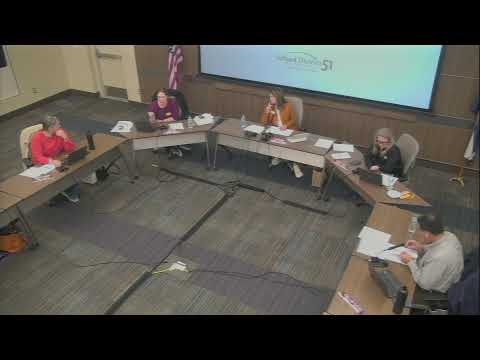
The Mesa County Valley School District No. 51 Board of Education heard a detailed budget briefing on district finances and enrollment trends that warned of an ongoing multi‑million‑dollar shortfall.
District finance staff reported steep enrollment declines and constrained revenue. “We’re now down over 2,700 students since 2019‑20,” the presenter said, noting the district’s October count fell by 622 students year‑over‑year. Those declines reduce per‑pupil revenue and have put long‑term pressure on the budget.
Why it matters: staff said the combination of fewer funded pupils, proposed changes to student‑count averaging at the state level, and federal budget uncertainty could cut anticipated revenue while costs for benefits and transportation continue to rise. District staff estimated the board must find about $5.6 million in ongoing savings to restore pay step increases and cover projected cost growth.
What staff outlined: the finance presentation reviewed prior cost‑saving steps (about $7 million in annual savings from previous central‑office cuts and school closures), current overstaffing relative to the staffing model (estimated roughly 30 FTE, or about $3 million, with projections that could rise to about 43 FTE / $4.3 million), and a set of near‑term actions under consideration.
One of those actions is an early retirement incentive (ERRI) the district has offered to reduce ongoing payroll obligations. Mel, the district presenter, described the program as “a one‑time payment equal to 25% of base pay to eligible staff who are at least 50 years old and have at least 20 years of service,” with letters of intent due Jan. 16; staff said participation would create vacancies that could be addressed through attrition or selective backfilling to realize savings.
Board members pressed staff on options. Several trustees asked about using reserves to backfill potential federal Title funding reductions; staff replied reserves can be used for one‑time needs but are not a sustainable solution for ongoing programmatic costs. Staff also said Title I, II and III allocations support substantial student‑facing services and that relying on reserves long term would risk future stability.
Next steps: staff said the board will receive a revised (readopted) budget in January to reflect finalized October counts and any updated federal or state allocations, and the district will continue vacancy reviews, staffing allocations and advocacy at the state level. The superintendent emphasized the goal of protecting classroom services where possible while aligning staffing to the district’s funded pupil counts.