Get Full Government Meeting Transcripts, Videos, & Alerts Forever!
Get email alerts on the Education Technology topic
No spam. Unsubscribe anytime.
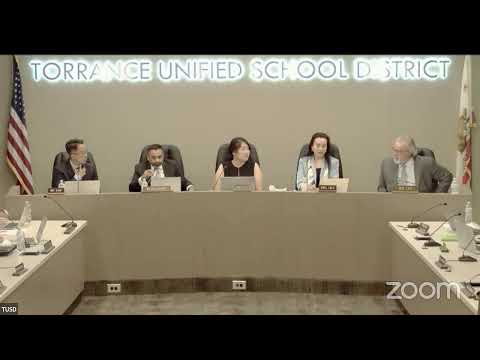
Torrance Unified outlines AI classroom pilots and a Measure T Chromebook refresh, proposes buying 4,000 devices
Summary
District technology leaders told the school board they plan to buy about 4,000 Chromebooks and pursue licenses for classroom AI, citing device auto-update expirations and statewide AI curriculum requirements; the presentation was informational and no new spending vote occurred.
Gil Mara, Torrance Unified’s educational technology and information services officer, told the school board the district is expanding classroom use of artificial intelligence and must refresh a portion of its Chromebook fleet to remain secure and test-ready.
"We're really setting up our students for success," Mara said, describing an AI exploration program that selected 25 teachers across grade levels to pilot a platform called School AI and develop classroom lessons that pair AI tools with critical media literacy.
Why it matters: Mara said the district has about 21,000 Chromebooks and that roughly 4,000 devices will soon become ineligible for operating-system updates and state testing. To avoid security and testing disruptions, staff recommended purchasing 4,000 Chromebooks in the next several months and reserving about $3.2 million for a later refresh cycle. The district previously structured Measure T as recurring $5 million issuances to support technology refreshes; staff said the latest bond sale received an improved credit rating that reduced borrowing costs.
Mara described the district's AI committee and training work: more than 150 professional-development hours over the summer reached nearly 1,700 teachers, and a teacher cohort will develop guidance for student and parent AI committees. He tied the work to new state expectations, saying Assembly Bill 873 requires critical media literacy across grade levels and Assembly Bill 2876 incorporates AI literacy into state instructional frameworks.
Board members asked technical and policy questions. One board member asked whether students' phones and new phone-based AI platforms will be part of classroom access. Mara said phone-based AI already exists in consumer apps but emphasized district control: "If the students don't have access to a phone but we're providing a safe space…with the proper license for the student and the proper hardware and training for our teachers and staff," the district could license AI for Chromebooks or other devices.
Staff also cited ongoing maintenance and device-longevity work: many Chromebooks are repaired to extend life (battery replacements, keyboard repairs) and usage analytics are monitored to retire underused applications. Mara gave an approximate all-in per-device cost of about $300 when factoring in delivery, licensing and e-waste fees.
What the board did next: the presentation was informational and no new spending motion was taken during the meeting; staff said the Measure T bond issuance had already occurred and details of purchases and licensing will return to the board as procurement details are finalized.