Get Full Government Meeting Transcripts, Videos, & Alerts Forever!
Get email alerts on the Paraquat Ban topic
No spam. Unsubscribe anytime.
Committee hears testimony on HF 39‑65 to ban paraquat after patient and public‑health appeals
Summary
The House Agriculture Finance and Policy Committee heard hours of testimony on HF 39‑65, which would prohibit sale and use of paraquat in Minnesota. Patient advocates and public‑health groups urged a ban citing links to Parkinson’s disease; farmers and retailers warned of crop‑management impacts. Members laid the bill over for fiscal and implementation review.
Representative Tabke introduced House File 39‑65 on the proposal to prohibit the sale and use of paraquat in Minnesota and invited two‑minute presentations from testifiers.
Dan Feehan, chief policy and government affairs officer for the Michael J. Fox Foundation for Parkinson’s Research, told the committee the foundation’s review of epidemiological and toxicological literature shows a clear link between paraquat exposure and increased risk of Parkinson’s disease. “Decades of research have shown that people who work with or live near where paraquat is applied have a higher risk of developing Parkinson’s,” Feehan said, and urged members to act on the legislation.
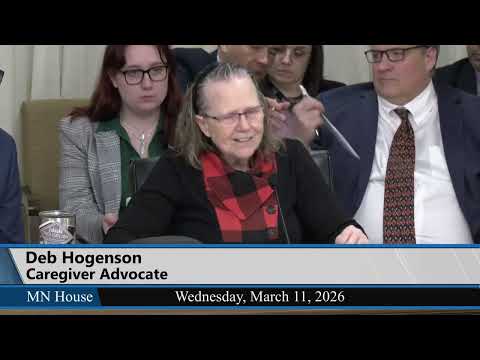
Multiple patient advocates described personal and family impacts. Robert in Ivory, who said he was diagnosed in his early 40s, said he had no known genetic risk factors and that clinicians told him environmental exposure influenced his diagnosis; he urged members to support the bill. Lisa Erickson, who identified herself as a Parkinson’s Foundation board member, said prevention is “key” and asked lawmakers to align Minnesota with countries that have banned the chemical.
Advocacy groups framed paraquat as both an immediate and long‑term public‑health risk. Morgan Shaffer of Clean Water Action described paraquat as an herbicide that can be transported off target and said long‑term, low‑level exposure has been associated with Parkinson’s and other health outcomes. A Parkinson’s Foundation representative reiterated the foundation’s support for the measure.
Industry witnesses urged caution. Lee Held, executive director of Minnesota Crop Production Retailers, and farmer Tim Braun said paraquat remains a useful, tightly regulated tool for terminating certain cover crops and managing no‑till systems. They noted applicator licensing, closed‑loop handling requirements and buffer rules and warned that removing the product without clear, practical alternatives could harm some cropping systems.
Tom Peterson, commissioner of the Minnesota Department of Agriculture (MDA), and agency staff described usage patterns and regulatory mechanisms. Peterson said paraquat use in Minnesota has increased with wider cover‑crop adoption and that the department was finalizing the fiscal note. MDA staff said the state’s pesticide waste‑collection program and cooperating county hazardous‑waste sites would accept existing product at no charge if a ban were enacted and described typical disposal methods as neutralization and incineration.
Members pressed MDA on rollout, county cooperation, enforcement and what alternatives farmers would use if paraquat were restricted. Supporters emphasized that many countries and jurisdictions have already banned the chemical and argued Minnesota could reduce future exposures; opponents questioned whether alternatives have been validated at scale. Representative Tabke asked to lay the bill over pending the fiscal note and additional discussion; the committee approved the request.
Next steps: HF 39‑65 was laid over for further committee consideration and a fiscal note. The committee will revisit implementation details, including timelines for sale, use and waste‑collection procedures.