Get Full Government Meeting Transcripts, Videos, & Alerts Forever!
Get email alerts on the Program Integrity Medicaid topic
No spam. Unsubscribe anytime.
Senate committee advances program‑integrity bill requiring broader EVV, enrollment checks; providers warn of workforce and cash‑flow risks
Summary
Senate File 38.61, as amended, would expand electronic visit verification (EVV), mandatory training, individual provider enrollment and other oversight across 14 DHS‑designated "high‑risk" Medicaid services; the committee adopted amendments and recommended the bill to Health & Human Services amid provider warnings about surety‑bond costs, 90‑day reserve proposals and implementation timing.
A Minnesota Senate committee advanced a broad program‑integrity package aimed at 14 Medicaid services the Department of Human Services identified as vulnerable to misuse, adopting amendments and referring the measure to the Health and Human Services Committee.
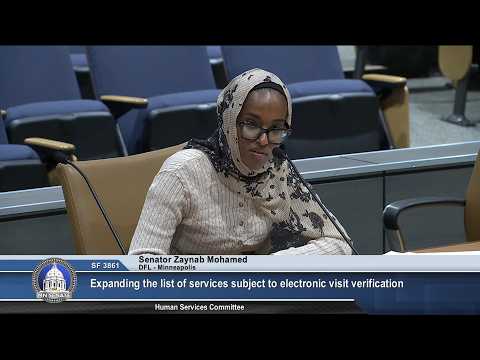
Senator Muhammad, the author, said the bill (recorded in the hearing as Senate File 38.61) would create end‑to‑end safeguards for high‑risk services: mandatory provider training, expanded provider‑enrollment disclosures, individual provider identifiers, signature verification for services and a requirement to use electronic visit verification (EVV) for covered high‑risk services.
Speaking to the committee, Josh Berg, director of Minnesota services and strategic growth for Accessible Space, praised the goal of strengthening program integrity but warned that EVV can distort accountability for many home‑and‑community‑based services that are not delivered in discrete, unitized visits. "When EVV is forced into this model, we don't get the accountability — we get manufactured time stamps, distorted data and an illusion of integrity that actually undermines the real thing," Berg said. He urged clearer, enforceable implementation that protects continuity of care.
Multiple provider witnesses urged caution on financial provisions. Jen Geeter, chief compliance officer at MATH Midwest (Minnesota Autism Center), said adding a surety‑bond requirement and a 90‑day cash reserve would create substantial barriers for small and nonprofit providers already facing payment delays from prepayment review: "A reserve of 90 days is not feasible for providers not backed by private equity," she said, adding her organization faces millions in unreimbursed claims tied to current review processes. Ellie Skelton, an executive director of a statewide mental‑health provider, asked for exemptions where EVV does not make operational sense (for example, 24/7 staffed residential settings) and recommended delaying implementation timelines to avoid disruption.
Supporters and many committee members said the changes are intended to protect beneficiaries and public funds; opponents and some providers warned of workforce loss, administrative strain and unintended service disruption. The committee adopted the A1 amendment (which recodifies provider‑enrollment language and extends policies across designated provider types) and considered an A3 amendment that would require DHS to conduct site visits and allow withholding up to 10% of DHS administrative funds if statutory site‑visit requirements are not met.
After debate and additional amendments, the committee voted by voice to recommend Senate File 38.61, as amended, to pass and be referred to the Health and Human Services Committee for further refinement. Members on all sides said the bill will return to this committee after work in Health & Human Services and that further technical changes are likely.
What happens next: the measure is referred to Health and Human Services for additional hearings and drafting changes; supporters signaled openness to work with providers on implementation details and financing alternatives such as flexible financial assurance instead of a single bond mandate.