Get Full Government Meeting Transcripts, Videos, & Alerts Forever!
Get email alerts on the Data Centers topic
No spam. Unsubscribe anytime.
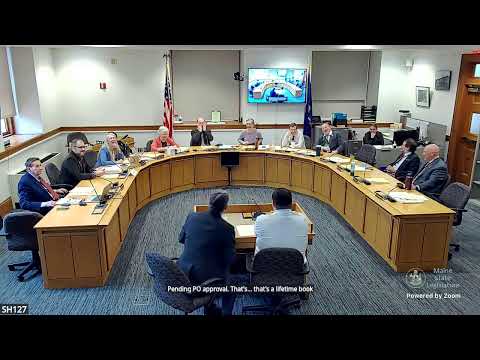
Lawmakers hear broad concerns about data‑center incentives; sponsor urges pause and a study
Summary
At a public hearing on LD 713, Sen. Nicole Graowski and multiple municipal, labor, environmental and economic‑policy witnesses urged a pause or careful study of state tax incentives for data centers, citing limited long‑term jobs, large power/water demands, secrecy in negotiations and growing fiscal costs in other states.
The Taxation Committee heard testimony and questions on LD 713, a proposal to exclude data centers that begin operations on or after July 1, 2026 from the state’s business equipment tax exemption programs and to direct the Department of Economic and Community Development (DECD) to study incentives available to data centers.
Sponsor’s case: Sen. Nicole Graowski framed the amendment as a targeted, prospective pause so Maine can determine whether existing incentive programs (BETE and DIERGO) — which were designed to encourage capital‑intensive, job‑creating industries — are appropriate for data centers. "Data centers are not without value," she said, "but the evidence is mixed and the concern about job creation in particular is well documented." She pointed to examples where states provided large tax breaks but received few permanent positions in return.
Municipal and public testimony: Amanda Campbell of the Maine Municipal Association told the committee that BETE reimburses municipalities only 50% of foregone property tax revenues and that municipalities deserve comprehensive study and a voice in any incentive discussions. "Exemptions of any kind create winners and losers and simply shift the property tax burden onto the rest of the base," she said.
Other witnesses echoed concerns:
- Cat Taylor (resident/property owner) urged stronger protections and suggested large‑load electricity tariffs to avoid passing utility costs to ratepayers; she emphasized secrecy in prior negotiations and the use of NDAs.
- Mora Pillsbury (Maine Center for Economic Policy) urged a moratorium on subsidies for data centers and suggested a neutral third‑party evaluation such as OPEGA rather than letting DECD study alone.
- Jason Shedlock (Maine Building Trades) delivered a nuanced view: while construction jobs are meaningful, the building trades opposed an immediate exclusion that would prevent studying whether incentives could incorporate labor standards and local benefit conditions; his union wants to ensure local contractors and workforce standards in any future incentive design.
Committee questions and context: Members noted related work in the Energy, Utilities and Technology Committee, including proposals to limit very large consumers by megawatt thresholds and to form a coordination council to evaluate grid, water, and land‑use impacts. Members asked whether incentives are the key driver of siting decisions; witnesses and some members said large sites often choose locations for land, climate, or grid characteristics rather than tax breaks alone.
Next steps: The sponsor’s amendment does not strip incentives from existing participants; instead it asks DECD to catalogue and study existing financial incentives that could apply to data centers and report back by Nov. 4, 2026. The committee received divergent views and will weigh options ranging from a targeted prospective exclusion to a narrowly framed moratorium pending study.