Get Full Government Meeting Transcripts, Videos, & Alerts Forever!
Get email alerts on the Unorganized Territory Costs topic
No spam. Unsubscribe anytime.
Committee backs LD 2222 with larger one‑time UT prepayment; members press county official on drivers of rising costs
Summary
The Taxation Committee voted to advance LD 2222, approving a larger one‑time draw from the unassigned balance to prepay municipal cost components for unorganized territory services. Committee members pressed county/state officials about education, TIFFs and emergency services as the primary drivers of multi‑year cost increases.
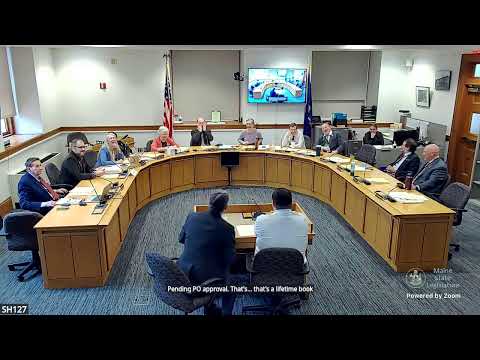
The Joint Standing Committee on Taxation moved LD 2222 forward after a work session in which lawmakers probed the finances behind municipal cost components for unorganized territories (UTs).
The bill, designated an emergency measure, establishes municipal cost components for state and county services in UTs for fiscal year 2026–27 and provides a one‑time prepayment to the UTs of Washington County. The committee approved an amendment offered by Sen. Mike Tipping to increase the amount drawn from the unassigned fund balance by $1 million (to a carryforward amount of roughly $2.517 million), leaving about $5 million in the reserve.
Why the change: officials and members said they wanted to smooth a sudden tax shock facing many UT property owners after recent revaluations. "Where there's more money going out than coming in, this balance helps keep the wheels of government rolling along," said Mr. Jones, the official who answered budget questions for the committee. He told members the unfunded balance peaked near $12 million and is now about $6 million, and that earlier municipal cost components often ran around $3 million.
What members pressed: Lawmakers asked for clearer data showing what is driving the multi‑year increases. "Education is a major driver," Mr. Jones said, noting that tuitioned students and the cost of special‑education services increase UT expenditures because receiving districts set tuition rates. He also highlighted tax increment financing (TIFF) obligations and rapidly rising EMS/fire/police protection costs as significant contributors.
"TIFFs drive up a lot of cost for UT residents," Mr. Jones said, explaining that TIFF repayments are ultimately borne by UT taxpayers even when the hope of the TIFF is to boost property values later.
Opposition and vote: Representative Gregory Swallow said he would oppose further draws on the fund and favored retaining a $6 million cushion. The motion to adopt Sen. Tipping’s amendment was seconded by Representative Quint and carried in the committee vote; a roll‑style reading of members in favor and in opposition was recorded by the clerk.
What happens next: With the committee majority reporting that LD 2222 is "ought to pass as amended," the bill moves on to the next legislative steps. Committee members also asked staff and Mr. Jones to provide further county‑by‑county breakdowns of cost components (education, roads, local services) and longer‑term trend analyses to better understand and moderate future increases.
The committee recorded the formal motion and vote on LD 2222 during the work session; members asked staff to return additional county‑level trend data at a subsequent hearing.