Get Full Government Meeting Transcripts, Videos, & Alerts Forever!
Get email alerts on the Tenants Right To Organize topic
No spam. Unsubscribe anytime.
San Marcos council approves first-reading ordinance recognizing tenantsright to organize after debate over manager liability
Summary
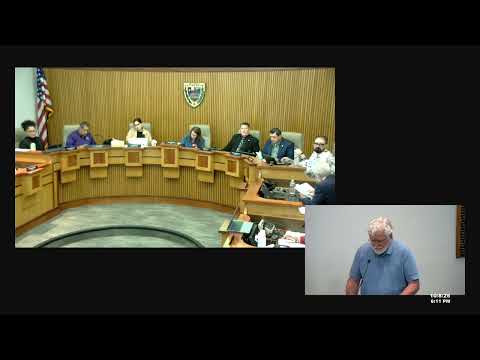
On Oct. 8 the San Marcos City Council approved Ordinance 2025-43 (first of two readings) to codify tenants'right to organize and create penalties for violations. Council rejected an amendment that would have removed property managers from a misdemeanor provision; the ordinance passed 7'0to'0 on the main motion.
The San Marcos City Council voted 7 to 0 on Oct. 8 to approve Ordinance 2025-43 on its first of two readings, adding a city code article to formally recognize a tenants'right to organize and to provide penalties for violation.
The measure prompted sustained debate over whether the ordinance should hold individual property managers criminally liable. Councilmember Lorenzo Gonzalez moved an amendment to strike the words "or property manager" from section 46.127(b) to avoid personally criminalizing on-site managers; the amendment failed by a 5'no, 2'yes margin. Council then voted 7'to'0 to approve the ordinance as drafted.
Why it mattered: supporters said the ordinance strengthens tenants'ability to organize locally; opponents, including Hannah Garcia of the Austin Apartment Association, warned it could conflict with state law and impose unintended liability on on-site property staff. "A tenants right to organize is already properly governed by the Texas Property Code," Garcia told the council, arguing the draft "creates unnecessary duplication" and that naming property managers as individually liable would be "problematic" for employees who act as agents of an owner.
Councilmember Lorenzo Gonzalez, who proposed the amendment, said the change was meant to ensure that "the landlord should get the citation, not the property manager" when violations occur. City Attorney (Mr.) Carr explained legal nuances to the body, noting that the ordinance's definitions allow serving a citation to an on-site agent on behalf of an out-of-state owner and that, under the Texas Penal Code, agents can sometimes be held liable in certain circumstances. "The amendment takes the property manager out of the equation for getting the ticket," Carr said, adding that the ordinance's definition of agent still permits service to a local representative for legal process.
Council members who opposed the amendment emphasized enforcement practicality and accountability. Several described scenarios in which owners were unreachable and said the city needs a reliable means to impose penalties and correct landlord practices. Councilmember Mendoza said removing property managers could let owners "pass the buck" and hamper enforcement in chronic problem properties.
What the ordinance does: Ordinance 2025-43 amends Chapter 46 by adding an article to formally recognize tenants'right to organize, sets penalties for violations (including a misdemeanor provision in section 46.127(b) as written), provides a savings clause for conflicting provisions, and establishes the ordinance's effective date. The city attorney and staff said existing code provisions allow serving citations to on-site agents when owners are out of jurisdiction, and they noted that criminal liability for agents can also arise under state law in some situations.
Notification and next steps: staff said they will notify apartment complexes upon passage; the city has compiled a contact list of some 200+ apartment properties for mailers and web postings tied to ordinance implementation and any inspection or compliance outreach. The ordinance was approved on first reading and would return for a second reading and final adoption at a future meeting.
Legal and stakeholder context: supporters including tenant advocates and local civic groups said the change will improve accountability for housing conditions and tenant organizing rights. The Austin Apartment Association recommended amendments to avoid individual liability for property managers and cited the Texas Property Code in support of limiting duplication of protections between state and local law. The city attorney also referenced provisions of the Texas Penal Code when explaining how agent liability could operate in practice.
The council scheduled no immediate final adoption; the ordinance will come back for its second reading on a subsequent agenda.