Get Full Government Meeting Transcripts, Videos, & Alerts Forever!
Get email alerts on the Local Budget topic
No spam. Unsubscribe anytime.
Granville County presents no-tax-rate-increase budget funding pay raises, schools and fire services
Summary
County staff presented a recommended FY2026–27 budget that holds the county and fire tax rates steady while using fund balance and existing revenues to implement pay-plan changes, add limited staff, and sustain school and public-safety capital commitments. The board will hold work sessions next week, a public hearing on May 18, and is targeting adoption on June 1.
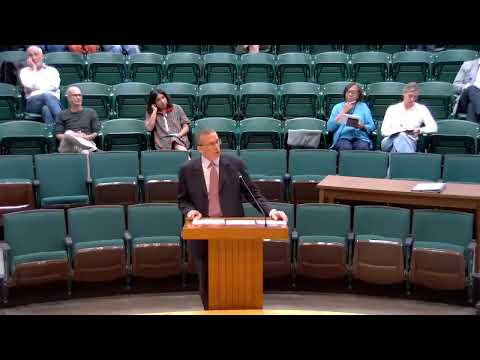
A county staff member presented a recommended fiscal year 2026–27 budget to the Granville County Board of Commissioners that keeps both the county tax rate (63.1 cents per $100 valuation) and the fire tax rate (6 cents per $100 valuation) unchanged while funding employee pay adjustments, school operational and capital needs, and continued investments in public safety.
The presenter described the plan as a “no tax rate increase budget” designed to optimize existing revenue streams, noting the current fiscal year budget totals a little over $91 million and that the recommended document reflects the work of 27 departments. Staff said the county will use some excess unassigned fund balance to begin implementing pay and classification study recommendations beginning July 1, while acknowledging additional recurring funds will be required in future years to sustain those raises.
Why it matters: the budget would expand recurring employee compensation in response to a pay-and-classification study the county completed this year. The presenter said inflation since 2019 has been roughly 26 percent and that many positions remain behind market averages; using fund balance to start adjustments preserves the board’s goal of not increasing the tax rate while attempting to address recruitment and retention pressures.
Key elements of the recommendation include continued above-historical capital funding for Granville County Public Schools, a $250,000 contribution toward five instructional coaches previously supported by federal ESSER funds, maintenance of the county’s obligation to Vance-Granville Community College (25 percent of main campus facility costs and 100 percent of South Campus), and targeted additions such as an assistant tax administrator and a full-time courthouse janitorial position (net cost $28,000).
On public safety, the presentation highlighted sustained investments via the fire tax and the recent hire of a fire commission administrator. Staff said the fire tax has materially increased funding available to volunteer departments, improved weekday coverage with paid firefighters, and produced faster response times. The presenter recommended reserving 5 percent of the sheriff’s office budget in contingency for unanticipated spikes; staff said that approach would not change current staffing levels.
Revenue assumptions and risks: staff emphasized the county’s revenue mix — roughly 62 percent property tax and about 20 percent sales and other taxes — and said sales taxes have exceeded projections but remain volatile. The presenter cited recent federal legislation (HR1) and state actions as sources of fiscal uncertainty, noting an estimated $435,000 local impact from specific HR1-related changes to social services reimbursements.
Fees and other changes in the proposal include incremental solid-waste fee increases to keep the enterprise fund solvent, a waivable fee to expedite animal surrenders, higher after-the-fact permit fees for unpermitted structures, a new inspection fee for electrified business signs, and planned software investments (Placer AI for economic development insights, NeoGov for HR, and direct Office 365 licensing) to increase efficiency and reduce long-term costs.
Staff cautioned that, within a no-tax-rate framework, the county cannot fund several million dollars of additional requests from departments and outside partners. The presenter declined a one-time $275,000 request from Granville Vance Public Health, citing concerns that the described needs did not appear one-time and could require ongoing funding beyond the next fiscal year.
Next steps: staff scheduled three full-day budget work sessions next week, a public hearing on May 18 for public comment, and is targeting adoption of the final budget on June 1; however, staff noted the county is not statutorily required to adopt a budget until the end of June if more time is needed.