Get Full Government Meeting Transcripts, Videos, & Alerts Forever!
Get email alerts on the Special Education topic
No spam. Unsubscribe anytime.
Special education director presents IDEA‑B application and updated procedures; board approves application
Summary
Special education director presented the district’s IDEA‑B application and an updated special education procedures handbook, citing district graduation and dropout metrics and a reduction in federal entitlement funding; the board approved the IDEA‑B application as an action item.
Mr. Coker, the district’s special education director, presented the Silver Consolidated School District’s IDEA‑B application for the 2026–27 school year and summarized updates to the district’s special education procedures handbook, which the district received April 13, 2026.
In his presentation Mr. Coker said the district’s most recent graduation rate for students with disabilities was 83.31%, compared with a state rate he cited as about 73.69%: "the state was sitting at about 73.69% while the district was at 83.31," he said. He also reported a district dropout rate for all students near 8.4%, lower than the statewide figure Mr. Coker cited as 11.47%.
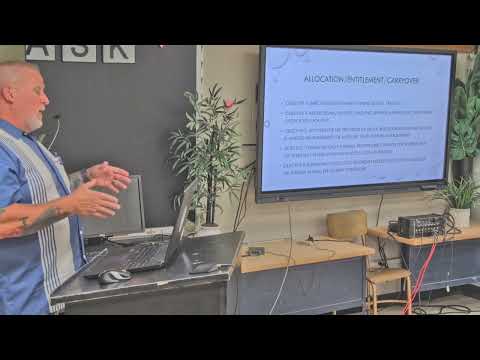
Mr. Coker walked the board through the IDEA‑B priorities that will shape the application and programming: improving graduation outcomes for students with disabilities, reducing dropouts, funding extended‑school‑year services (distinct from summer school), child‑find activities and services for parentally placed private‑school students, and reimbursement for travel and personnel who serve remote sites. He noted that preschool entitlement funding for the district is roughly $22,000 and that the district experienced a federal entitlement allocation decline from about $900,000 last year to roughly $700,000 for the coming application cycle.
He explained Part C→Part B transitions for children moving from the Family Infant Toddler (Part C) program into Part B services at age three and the required timelines for transition meetings and eligibility determinations. He also described the district’s timeline for initial referrals and evaluations — 15 school days to initiate evaluations after prior written notice and 60 calendar days from parental consent to complete evaluations and reports.
Mr. Coker briefed the board on recent Office of Special Education (OSD) monitoring, describing desktop and in‑person audit processes and some follow‑up training and procedural clarifications the district has implemented, including a dedicated child‑find procedures section added to the handbook.
After the presentation the board considered the motion to approve the IDEA‑B application. The motion passed on a voice roll call.
Next steps: Mr. Coker said the application had already been submitted to the state and the district was awaiting further notice on approval and funding allocations.