Get Full Government Meeting Transcripts, Videos, & Alerts Forever!
Get email alerts on the Athletic Fields topic
No spam. Unsubscribe anytime.
Valley Central outlines yearlong plan to repair worn athletic fields; community urges faster action and more funding
Summary
District facilities staff presented a Cornell-guided maintenance plan and monthly schedule for improving stadium and practice fields; board members and residents urged quicker remediation and questioned a $75,000 grounds-equipment allocation versus limited remediation funds.
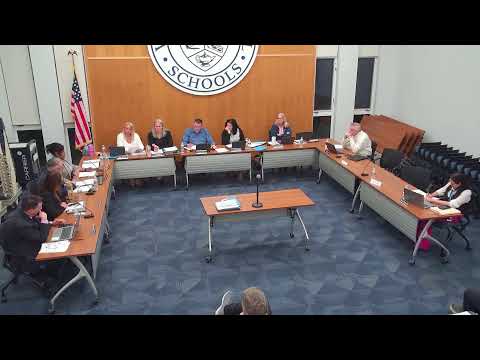
Valley Central School District officials on April 13 presented a yearlong maintenance and recovery plan for the district’s heavily used athletic fields, saying improvements will be gradual but data-driven, while board members and residents pressed for faster action and more funding.
Ryan Schmidt, the district’s director of facilities, told the Board of Education that the district engaged Cornell’s turf program to assess field conditions and provide recommendations. Cornell will perform four on-site visits this year, photo-document conditions, and offer short-term maintenance guidance, Schmidt said. The district has implemented aeration, overseeding and a digital maintenance-tracking system and plans soil testing and irrigation audits.
The presentation detailed work done last fall and winter, weather impacts and a month-by-month maintenance schedule recommended by Cornell. Schmidt said some aeration and overseeding were completed in November after fields were taken out of service; staff plan the next aeration in May and indicated aeration will be ongoing. He also outlined several operational changes: taking high-impact games off the stadium field during recovery, implementing field-rotation schedules, and coordinating closures with coaches and Section Nine to reduce player and spectator traffic on recovering turf.
Board members and members of the public pushed back on the pace and scale of the plan. “The fields the way that they are is not because of this winter. It’s years and years of neglect,” Board member Katie said, arguing the district should pursue a faster remediation timeline and increase the budget. Another board member noted the district’s grounds-equipment line is $75,000 for the coming year, leaving roughly $33,000 for repair and remediation; that gap drew criticism from those who said the purchase of large equipment should be weighed against immediate field needs.
Schmidt described equipment options under consideration that Cornell recommended, including autonomous mowing and larger overseeding or spray equipment; he said staff will review data before deciding whether to buy or rent specialized machinery. The district’s itemized line-level costs presented during the meeting included topsoil $3,200; seed $20,000; fertilizer $5,000; infield mix $2,200; sand $750; and miscellaneous ~$2,300. Schmidt told the board the grounds-equipment allocation was derived from Cornell’s maintenance schedule.
Athletic director Teresa Hu-Hulesky and maintenance foreman Krista Grove joined the presentation, explaining constraints that limit immediate field shutdowns. “When we move teams off the stadium field, we’re also going to need a scoreboard,” Hu-Hulesky said, noting varsity timing and scoreboard requirements that complicate moving games. Staff also cited scheduling density—"six to seven contests a day" in peak spring periods—and the shared middle/high-school campus footprint as reasons they have limited alternate practice space.
Several community members with turf experience urged a different approach. “You can’t redo a field in less than a year,” Bonnie Zipkin said, recommending consultation with everyday field operators and suggesting reconfiguring field layouts or prioritizing sod in high-impact locations. Tom Stoddard, a long-time coach, urged the district to provide transport to alternate fields or otherwise accommodate practices off-site rather than keep teams on fields in dangerous condition.
Superintendent and central-office staff told the board they would follow Cornell’s recommendations and evaluate data at season’s end to determine whether in-year budget modifications are warranted. Board members said they would consider increasing the line in future budgets if the evidence supports faster remediation.
The district emphasized short-term steps intended to protect player safety while pursuing longer-term options—including the possibility of additional fields, turf conversion and internships with turf-management programs—subject to funding and timetable constraints. “Looking ahead, seeing improvement in field conditions will be slow but noticeable over the next few years,” Schmidt said.
Next steps: Cornell will continue its scheduled visits and the district will maintain digital tracking of maintenance activities and field use. Board members said they will revisit funding decisions if Cornell’s yearlong data indicate a need to accelerate remediation.