Get Full Government Meeting Transcripts, Videos, & Alerts Forever!
Get email alerts on the Municipal Budget topic
No spam. Unsubscribe anytime.
Absecon council cites shrinking surplus, lost state aid and higher insurance rates for 2025 municipal tax increase
Summary
Absecon City leaders presented the 2025 municipal budget on May 1, 2025, explaining an 11-cent municipal tax increase driven by a $415,000 reduction in available surplus, lost state aid and rising health-insurance and debt-service costs; council also defended hiring additional police officers funded partly by grants.
Absecon City officials on May 1 outlined a 2025 municipal budget that raises the municipal tax rate from 1.059 to 1.169 and will require roughly $8.52 million to be raised by property taxes.
Council President D. Rose, who led the presentation, told residents the increase was driven by a combination of factors: a reduction in one-time surplus available to balance the budget (from $1.9 million used in 2024 to $1.5 million in 2025, leaving $415,000 less available), a loss of state aid (about $78,695), one-time revenues that did not recur and a 9.7% increase in health-insurance costs. "Cost increases are greater than our revenues — that's why there's a tax increase," D. Rose said.
The presentation included a department-by-department breakdown. Public safety is the largest category at roughly 35% of the municipal budget (a little over $4 million). D. Rose said the city used grants to help hire officers — "We secured grant money to help support the hiring of six police officers," he said — and emphasized the council attempted to avoid cutting direct resident services: "Our 2025 budget ... still includes fully funding our recreation program [and] our senior program. We did not cut any service directly to residents."
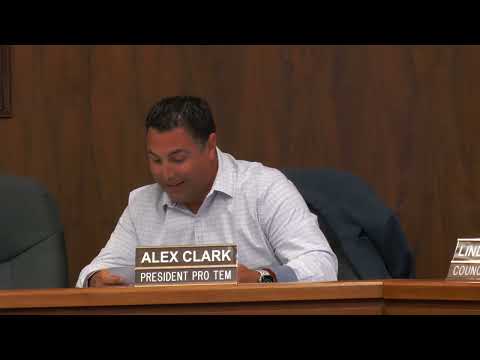
Councilman Alex Clark, finance committee chair, walked through revenue assumptions and ratable history, noting the municipal share is only a portion of a homeowner's total tax bill (school taxes account for roughly 51%). The council gave examples of how the municipal portion affects average homeowners: an average assessed value of $171,986 would see an estimated municipal increase of about $189.19 in 2025.
Officials said the budget relies on a $1.5 million planned use of fund balance, and presented steps to improve future fiscal stability: starting the annual budget process earlier (beginning in October), adopting multi-year projections, implementing spending freezes with trigger points, separating the administrator and CFO duties for stronger checks and balances, and reauthorizing a financial-advisory committee to provide resident oversight.
Public commenters questioned specific items that contributed to the increase. Kimberly Horton, a resident, asked about costs tied to police hires and said she believed some federal COVID funds had been used for capital projects. D. Rose and council members responded that COVID funds were applied to capital projects and that some policing costs were offset by grants; the council said grant awards do not always pay the full cost of new positions and some local funding is required.
Kristen Manning, from the shared CFO/purchasing service agreement provided by Galloway, introduced the new shared-service package and said the three-person arrangement (CFO, deputy, QPA) costs roughly $75,000 and does not include additional pension or health-insurance packages beyond that fee.
The council also announced a May 19, 2025 seminar at city hall with the New Jersey Division of Taxation and property-relief program managers to help residents evaluate eligibility for veteran, senior and disabled deductions.
The meeting produced two recorded consent votes early in the agenda (Resolution 95-2025 appointing a deputy clerk pro tempore for the May 1 meeting and Resolution 96-2025 allowing the budget to be read by title only). The council moved to open the floor to public comment later in the meeting and heard multiple residents on the budget's drivers, outreach and next steps.
Next steps: the council plans to formalize the revised budget timeline with ordinances and resolutions, reauthorize and expand a financial advisory committee beginning in June, and continue public outreach and grant-seeking to mitigate future tax-pressure on residents.