Get Full Government Meeting Transcripts, Videos, & Alerts Forever!
Get email alerts on the Student Assessment topic
No spam. Unsubscribe anytime.
District presenters detail mixed NJSLA results and next steps for instruction
Summary
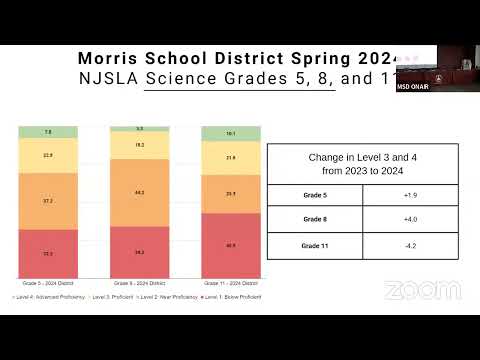
District administrators reported mixed 2024 NJSLA results: gains in early-grade ELA and grade-five math, declines in other grades. Leaders outlined evidence-statement analysis, grade-level meetings, PD and targeted tutoring to align instruction and address subgroup gaps.
Matthew Kryy, the district's director of elementary education, presented the Morris School District's 2024 NJSLA results and described immediate instructional responses. "It is not the same group of students; it's the same grade," Kryy said to explain cohort effects observed across grades. He reported a 3.2% increase in grade-three ELA proficiency compared with 2023 and a 3.4% increase for grade-five math, noting that grade five performed above the state average on tested math standards.
Administrators said scores vary by subgroup: Kryy cited figures such as 71.5% of white students (323 students) meeting or exceeding expectations in one elementary-grade example, and lower subgroup percentages for Black and Hispanic students. He said the district is using evidence-statement analysis provided by the NJDOE and Pearson to identify specific standards where students need exposure and to adjust pacing and instruction.
The district described concrete steps: grade-level meetings to share best practices and common resources; dedicated professional development on Nov. 5 for grades three'five teachers; continued high-impact tutoring during the school day for students who meet predetermined criteria; and a plan to add state-average comparators to the online presentation when NJDOE school-report data are released (mandated by Nov. 15).
Board members pressed for clearer comparators to similar nearby districts. An official said state school performance reports will permit district-to-district comparisons once released; administrators agreed to publish state averages as an addendum. Kryy and other presenters emphasized that some fluctuations reflect changes in who takes a given grade-level test (accelerated students are counted in their course cohort, not always the grade cohort).
The presentation also previewed grades'specific actions for middle and high school math pathways, including adopting aligned instructional materials for Algebra I and Geometry and incorporating more multi-step (type-two and type-three) application questions into classroom assessments.
The administration said it will post the full slide deck and add the state comparisons online and is scheduling follow-up curriculum committee work to review subgroup breakdowns and cohort counts. The board did not take a policy vote tied to these data during the meeting; staff said further detailed reports will follow in committee and online publication.