Get Full Government Meeting Transcripts, Videos, & Alerts Forever!
Get email alerts on the Probation Revocation topic
No spam. Unsubscribe anytime.
Court revokes probation, sentences DeAndre Coleman to 10 years after family-violence finding
Summary
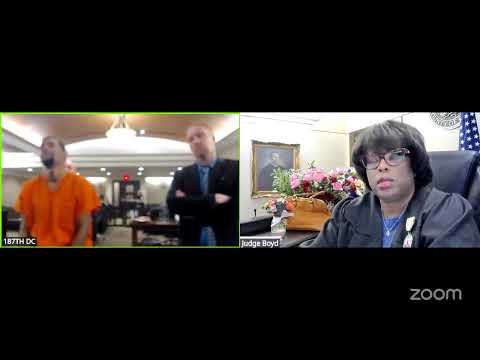
After hearing witness testimony and probation records in cause 2025 CR0000464, the 187th District Court found multiple violations true, entered an affirmative family-violence finding and sentenced DeAndre Lamont Coleman to 10 years in prison.
The 187th District Court revoked the community supervision of DeAndre Lamont Coleman and sentenced him to 10 years in prison after finding several violations true, including conduct resulting in an affirmative family-violence finding.
During the hearing the state called witnesses including Vashan Abrams, a court liaison officer with adult probation, who testified that Coleman had been advised of probation conditions at intake on April 23, 2025, and that he appeared to understand those conditions. The court heard victim and witness testimony describing alleged incidents and considered the defendant’s own statements.
The court found violations of condition numbers 1 and 1 (as charged) to be true, found violation of a second allegation not proven, and determined to revoke and sentence the defendant. The judge imposed a 10-year prison sentence, credited Coleman for any time served, and ordered that, because of a family-violence finding, Coleman will not be permitted to possess weapons or ammunition as a consequence of the felony conviction.
Defense counsel asked whether the court would retain jurisdiction; the judge declined. The court also noted a therapeutic-community recommendation but proceeded with the ten-year sentence.
What happens next: The sentence was entered on the record; appellate rights are limited as described by the court’s admonishment.