Get Full Government Meeting Transcripts, Videos, & Alerts Forever!
Get email alerts on the School Finance topic
No spam. Unsubscribe anytime.
Presenter outlines Bethalto CUSD 8 draft budget, highlights strong reserves and falling federal aid
Summary
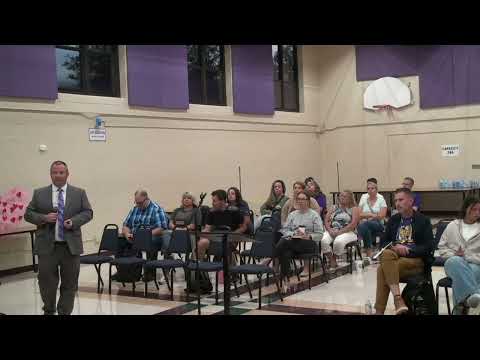
A presenter to the Bethalto CUSD 8 school board summarized the proposed FY26 operating budget, citing over 205 days cash on hand, a roughly $400,000 increase in evidence-based state funding to about $16 million and an 11% drop in federal revenue; board members pressed staff on grant options for security upgrades.
A presenter for Bethalto CUSD 8 reviewed the district's proposed FY26 budget at a school board meeting, saying the district projects more than 205 days of cash on hand and expects modest state revenue growth while federal funds decline.
The presenter said the district organizes its operating budget across four funds'education, operations and maintenance, transportation and working cash'and that working cash cannot be spent directly without board action. "I take an extremely conservative look at our'when I put together the budget, our expenses, I tend to overestimate a little bit and our revenue I underestimate a little bit," the presenter said, adding the district hopes to finish the fiscal year better than budgeted on June 30.
In the revenue picture, the presenter said evidence-based state funding rose by about $400,000 to roughly $16 million and described Bethalto as a tier-one district under the state's funding tiers. The presenter cautioned the district is becoming less reliant on federal dollars: "Our federal revenue, it's currently at 8.7%. That's an 11% decrease," the presenter said, and warned that some federal and state grant lines (including Title II and Title IV) should not be relied on for next year.
The presenter criticized the state's transportation reimbursement calculation, saying the advertised 80% rate is reduced in the fine print and that the effective reimbursement this year is closer to about 70% of actual costs. "So what when you do the math it comes out to be about 70% or 70 cents on the dollar rather than 80," the presenter said.
On expenses, the presenter said salaries and benefits comprise the largest share of spending (about 71% of the budget). Projected salaries total roughly $19.5 million with benefits of about $2.2 million, and the district employs just over 500 full-time staff, not counting daily substitutes.
The presenter also reviewed capital and program priorities, saying the Parkside construction is nearly complete and that bond proceeds shown in the budget (about $1.15 million) largely financed that project. The presenter estimated roughly $850,000 of those bond proceeds went to Parkside and that about $60,000 may still be outstanding. The district plans to continue several services originally funded by federal ESSER dollars, maintain investments in student technology and pursue layered supports through the MTSS/MTTSS process.
Looking ahead, the presenter named potential projects including new security cameras, an updated boardroom sound system, a repaired elevator or wheelchair lift at Bethalto East (both requiring architect sign-off and regional office of education approval before Health Life Safety fund use) and exploratory work on a solar installation on Story Lane. The presenter also noted upcoming BESPA contract negotiations and urged careful levy planning in December because assessment multipliers set by county or state can materially affect tax revenue.
Board members asked about grant strategies and timing. One board member noted Triad School District hired a third-party grant writer for a COPS grant, using smaller self-funded security work as an interim step before a larger grant-funded project; the presenter said COPS and other federal grants are competitive and administratively intensive. "Just because you fill out the paperwork doesn't mean you're going to get it," the presenter said.
The presentation concluded with applause and no votes or formal actions recorded in the transcript. Next procedural steps the presenter identified include continuing levy planning with county officials, pursuing grant opportunities for security and energy projects, and moving Health Life Safety projects forward after required architect and regional office approvals.