Get Full Government Meeting Transcripts, Videos, & Alerts Forever!
Get email alerts on the Tenants Rights topic
No spam. Unsubscribe anytime.
San Marcos council approves ordinance codifying tenants’ right to organize after debate over property-manager language
Summary
San Marcos City Council unanimously approved ordinance 2025-43 to codify tenants’ right to organize and create penalties for violations. Supporters said the law will protect renters; opponents warned that naming property managers as liable could conflict with state law and create operational problems for on-site staff.
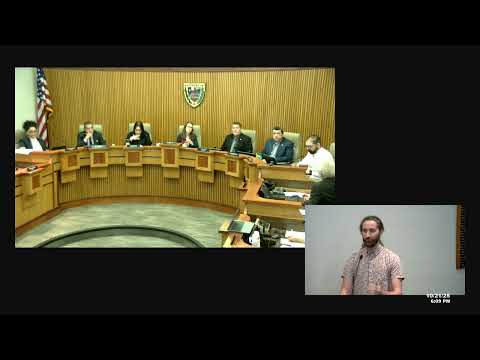
San Marcos City Council on Oct. 21 approved Ordinance 2025-43 on its second of two readings, formally adding a tenants’ right-to-organize provision to the city code and providing penalties for violations. The vote was 7–0.
The ordinance — brought forward by Council Member Rodriguez — drew a mix of public support and industry concern during the meeting’s public-comment period. Hannah Garcia, speaking on behalf of the Austin Apartment Association, urged the council to revisit language that would make property managers personally liable, citing state statutes and warning of legal conflicts. "Texas Local Government Code section 250.00003 specifically states an individual who is an employee of the owner of real property ... is not personally liable for criminal or civil penalties," Garcia said. She added that extending liability to individual property managers could "create significant challenges disrupting the effective management of communities." (Hannah Garcia represented the Austin Apartment Association.)
Tenants’ advocates and local organizers urged the council to keep property managers in the ordinance. "Property managers are the number one point person that tenants are communicating with," said Jared Chumz, a volunteer with the Tenant Advocacy Group (TAG). Chumz told the council that excluding property managers would leave tenants without effective remedies, particularly in large complexes where residents rarely deal directly with owners.
Former council member Maxfield Baker and resident Casey Baker also spoke in support. "I was on council and I didn't pass these things when I was there," Maxfield Baker said, adding that codifying the right now would benefit an estimated majority of local residents who rent. Casey Baker emphasized the need for a public-awareness campaign so tenants know and can exercise the new rights.
Council discussion centered on an access clause in Section 46.124(B)(5) that invites tenant organizers to assist only if they are accompanied by a tenant. Council Member Lorenzo Gonzalez asked whether that language prevents groups such as TAG from approaching known problem properties without an existing tenant invitation. In response, staff noted the ordinance as written does not allow organizers to "just go and solicit on it" and that organizers must be invited by a resident to enter private property. Several council members weighed in with competing views about whether to remove that requirement; an amendment that would have authorized unsolicited access was moved and seconded for discussion, but council ultimately withdrew the amendment to allow more time for legal review and community input.
City staff and supporters said the city will pursue education and outreach so tenants are aware of the new protections. Residents and advocates urged the city to combine the ordinance with a targeted "know your rights" campaign.
The ordinance was approved by the full council 7–0. The council did not adopt any last-minute changes to the property-manager language and set no immediate additional exemptions; the body indicated it may revisit operational or outreach measures after further legal review.