Get Full Government Meeting Transcripts, Videos, & Alerts Forever!
Get email alerts on the Historic Preservation topic
No spam. Unsubscribe anytime.
Woodland Park group pursues preservation options for Voss building and Roberts house; owner to meet with contractors
Summary
Committee members reported unexpectedly reaching the Voss building owner, who is meeting with contractors on March 18, and discussed hiring a preservation grant specialist to pursue History Colorado and Brownfields funding for phased restoration and planning grants.
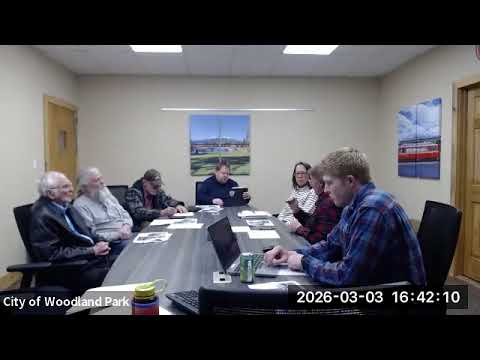
Woodland Park — Members of the city’s historic preservation committee spent most of their recent meeting outlining options to save two local historic properties, discussing funding paths and an unexpected opportunity to speak directly with one building’s owner.
Committee members said they were able to contact the owner of the Voss building, who is scheduled to meet with contractors at 3 p.m. on March 18. Members described the contact as a chance to learn the owner’s intentions and to present grant- or nonprofit-led preservation alternatives rather than immediately pursuing condemnation or nuisance-code enforcement. No formal city action to acquire the property has been taken; committee members said legal and budgetary questions remain.
Why it matters: The Voss building has been vacant and in deteriorating condition for years, and members framed the discussion as both a values choice and a practical exercise: if the owner will not or cannot restore the structure, the city and its partners face a multi-year, potentially costly process to acquire and remediate the site.
The committee discussed using a local preservation consultant, identified in the meeting only by her first name, Shereice, who has previously worked with History Colorado and local coalitions. Members said she could phase applications and target the state historic fund, which the group described as supported by gaming revenue and regularly refreshed, and could also advise on Brownfields funding when hazardous materials (such as asbestos) are a factor. The committee estimated an initial planning-engagement with the consultant could be secured for roughly $1,500; members asked staff to confirm a final fee and to identify available budget lines or a supplemental appropriation process if needed.
On timing: the committee acknowledged it had missed an April 1 application window for one program and instead will target the October funding cycle (applications due Oct. 1, awards announced by year-end, with funds arriving the following December/January). Members urged prompt internal coordination — including a decision on whether to restore interiors for public access or pursue a less-expensive, interpretive exterior restoration tied to a trailhead — because the grant schedule requires early planning.
Legal and cost uncertainties: The group reviewed an informal contractor estimate a year or two ago that placed renovation costs near $1.5 million; speakers repeatedly cautioned that number was a single, non-competitive estimate and that additional interior inspections and multiple assessments are needed. The committee also discussed the theoretical cost and timeline of a condemnation process (several speakers offered an informal attorney-fee range of about $20,000–$50,000), but members said the city currently lacks nuisance ordinances that would make a “step one” enforcement approach straightforward and that council sentiment has been reluctant to expand such regulation.
Roberts house and next steps: Separately, the committee said it had missed an April funding deadline for the Roberts house and will prepare to apply in October. Members asked staff to obtain a firm cost for an initial planning grant writer (the working estimate discussed in the meeting was about $1,500) and to clarify whether existing budget line 119 could be repurposed or whether a supplemental council action would be necessary.
Coordination with Parks & Recreation: The committee agreed to seek input from the Parks & Recreation Advisory Board to determine the desired long-term use for the Roberts site (full public access with bathrooms and pavilions vs. an interpretive exterior restoration tied to a trailhead). That choice will shape grant requests and scope.
Other items: The meeting included routine business — approval of the minutes (motion by Larry, seconded by Eric; passed by voice vote) — and brief updates on local grants, a T‑Mobile hometown grant application the historical society is assembling (roughly $50,000), community events and a planned documentary project.
What’s next: Committee members asked staff to (1) confirm the March 18 contractor meeting attendance and collect the owner’s stated plans; (2) obtain a firm engagement fee from the grant specialist and an updated cost estimate for the Roberts planning work; (3) check whether the 119 budget line is available or whether council action is required to free funds; and (4) schedule a joint or liaison meeting with Parks & Recreation to decide site use for Roberts house planning. No formal condemnation or acquisition motions were taken at the meeting.