Get Full Government Meeting Transcripts, Videos, & Alerts Forever!
Get email alerts on the Business Plan topic
No spam. Unsubscribe anytime.
Draft 2026 business plan released; Authority outlines pathway to complete Merced–Bakersfield by 2032
Summary
Staff released the draft 2026 business plan and began a 60‑day public comment period. The plan identifies cost savings and a delivery sequence aimed at completing Merced–Bakersfield as the initial operating segment, highlights commercialization opportunities (power, broadband, station area development) and requests continued legislative and stakeholder engagement.
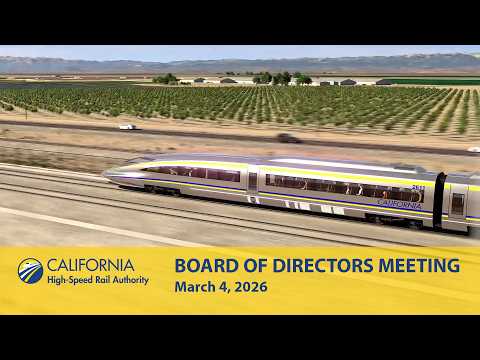
The California High‑Speed Rail Authority released its draft 2026 business plan and opened a 60‑day public comment period, presenting a delivery strategy that focuses on completing the Merced‑to‑Bakersfield initial operating segment and pursuing commercialization opportunities to support long‑term financial sustainability.
Mark, a senior staff presenter, said a bottoms‑up review of the Merced‑to‑Bakersfield alignment yielded roughly $2 billion in additional savings and that the Authority expects to complete construction of that segment by 2032 with initial operations following around 2033 in an optimized scenario. “We plan on doing eight trips per day,” the presenter said as part of the operational assumptions for the initial operating segment. The plan outlines a phased approach to reach population centers and contemplates commercial revenue streams (station area development, power generation and broadband) and low‑cost financing options to accelerate delivery.
Directors praised the plan's strategic approach while underscoring the need for proactive outreach with legislators and local officials. Board members requested follow‑up briefings on electrification planning, potential clean‑power partnerships, and a coordinated "dig‑once" approach to pair conduit or fiber work with civil construction.
The public comment period runs for 60 days; staff said it intends to return a final draft to the board at the April 29 meeting so the plan can be submitted to the Legislature by the statutory May 1 deadline.
Why it matters: the business plan frames a financing and construction pathway for phase‑one delivery and identifies commercialization and partnership opportunities intended to reduce net program costs. The plan sets concrete near‑term milestones and signals the Authority's priorities for legislative engagement.