Get Full Government Meeting Transcripts, Videos, & Alerts Forever!
Get email alerts on the Education Ethnic Studies topic
No spam. Unsubscribe anytime.
Sequoia Union board adopts revised ethnic studies scope after months of heated public debate
Summary
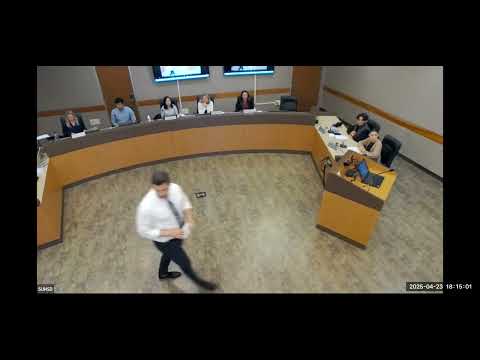
After hours of public comment from students, teachers and parents, the Sequoia Union High School District board voted 3-2 to accept a revised ethnic studies scope and sequence and defer the question of whether the class remains a graduation requirement to a fall study session.
The Sequoia Union High School District board on Wednesday accepted a revised scope and sequence for the district's ethnic studies course after a prolonged public-comment period that laid bare deep divisions in the community.
Supporters — including ethnic studies teachers and students — described the class as a student-centered course that increases engagement and provides historical context students otherwise do not receive. Melissa Diaz, an ethnic studies teacher at Sequoia High School, said the class gives students tools for critical thinking and civic participation: "Ethnic studies is about questions, fostering curiosity, introspection," she said during public comment.
Opponents told the board the current implementation has lacked oversight and that some supplementary classroom materials have been inappropriate. Multiple speakers urged the board to pause the requirement and revert to world history or to substantially revise the course. One parent said the rollout had been "premature, non-transparent, and has resulted in classrooms using discriminatory material."
District leaders described a multi-month revision process that draws on the California model curriculum and four years of classroom experience in Sequoia. Dr. Salassie (executive director of people, culture and collaboration) framed the work as iterative and interdisciplinary, and Victoria Dai (executive director of curriculum and instruction) outlined the team's criteria for vetted instructional materials, three types of review criteria (content/skills, pedagogy/delivery, sense-of-belonging), and a four-unit scope that pairs historical case studies with contemporary examples.
Board members debated both substantive and procedural issues. Several trustees said the district had not always gotten the implementation right and acknowledged harm where inappropriate materials had been used. One trustee said the state model curriculum had been revised substantially since earlier drafts and described the current alignment as different from the controversial draft that attracted broad criticism years earlier.
The motion the board approved accepts the proposed changes and directs that the broader question of whether ethnic studies is required for graduation be considered in a fall study session focused on the district's full set of graduation requirements. The vote was 3 in favor and 2 opposed.
What happens next: district staff will continue development and vetting of lesson sequences and resources, begin phased implementation of revised units, and hold the board study session in the fall to revisit the graduation-requirement question.