Get Full Government Meeting Transcripts, Videos, & Alerts Forever!
Get email alerts on the Election Law topic
No spam. Unsubscribe anytime.
White House outlines "Save America Act" provisions and defends election-integrity claims
Summary
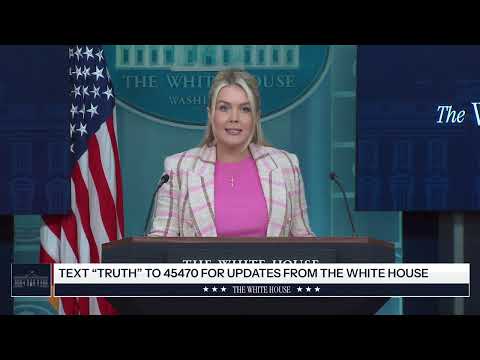
At a White House briefing the administration described five provisions of the "Save America Act," including voter ID and proof-of-citizenship registration requirements, a rollback of universal mail ballots with exceptions, a ban on biological males in women's sports, and a ban on gender-affirming surgery for minors; reporters pressed on voting access and legislative strategy.
The White House press secretary outlined five provisions the administration says are central to the "Save America Act," calling the package "overwhelmingly popular": a requirement that voters show ID to cast a ballot; proof of citizenship to register; elimination of universal mail ballots while preserving exceptions for illness, disability, military and travel; a ban preventing biological males from competing in women's sports; and a prohibition on gender-affirming surgery for minors.
Asked whether the bill would prevent married women from voting or make it harder for voters who changed their names, the press secretary said there is "zero validity" to those claims and that people who have changed names can update state registrations through existing processes. She also cited a 2005 Commission on Federal Election Reform report (chaired by former President Jimmy Carter and former Secretary of State James Baker) in discussing concerns about absentee ballots.
Reporters pressed how the administration planned to pass the measure in the Senate; the press secretary said the president wants urgency and all options on the table to move legislation quickly. She framed the issue as bipartisan and tied it to a larger push for what she called "election integrity," without laying out specific procedural steps the White House would take to alter Senate rules.
The press secretary's description reprises policy proposals that would alter voter registration and absentee-ballot practices in many states; passage would depend on congressional action and state-level implementation details not specified in the briefing. The White House did not provide text of the bill in the briefing and deferred particulars of legislative mechanics to congressional leaders.