Get Full Government Meeting Transcripts, Videos, & Alerts Forever!
Get email alerts on the School Budget topic
No spam. Unsubscribe anytime.
Rutherford County Schools reviews draft FY26 budget, flags revenue uncertainty and staffing pressures
Summary
At a May 7 special budget workshop, Rutherford County Schools staff reviewed a draft FY2026 budget that includes a proposed 1.7% COLA, an estimated $13.6 million operating gap in the general fund pending county revenue figures, plans for growth positions tied to new schools, and concerns about rising bus‑contractor insurance and fuel costs.
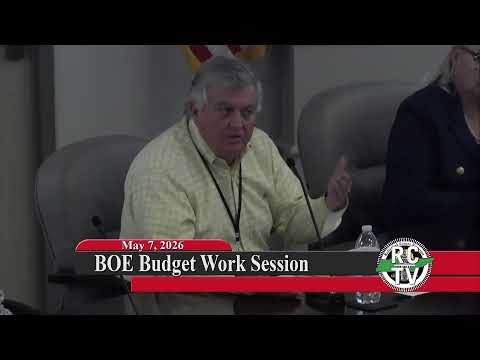
Rutherford County Schools officials presented a draft fiscal‑year 2026 budget at a May 7 special‑call workshop that relies on last year’s maintenance‑of‑effort and awaits final county revenue figures before final approval.
The presenter leading the workshop said the draft includes a 1.7% cost‑of‑living adjustment (COLA) and that district staff are modeling costs “per tenth of a percent” toward a 2% goal. The district’s draft general‑fund numbers show a material shortfall in the operating plan: staff described a roughly $13.6 million gap in the current draft that will narrow only once the county finalizes revenue figures.
Why it matters: the board must adopt a budget to meet a statutory deadline and then send it to the county commission; the county sets revenue while the school board sets expenditures. That division means the district must craft a spending plan without final county revenue numbers, increasing the risk that elected officials will later need to amend the budget.
What officials presented and proposed - Revenue and timing: staff said county revenue data for the district are not yet available and typically arrive very late in the process. Michael Smith, identified in the workshop as the county finance director, supplied an updated county revenue estimate the district used in modeling. - Compensation and benefits: the draft contains a 1.7% COLA; officials estimated that moving from 1.7% to a 2.0% total COLA would cost about $1.3 million. Staff also budgeted to cover roughly half of an anticipated ~10% increase in insurance costs (the district would cover about 5% with employees covering the remainder). - Staffing and growth positions: presenters said the district has right‑sized positions this cycle (about 60 positions reassessed and roughly 40 transferred) and is budgeting growth positions tied to opening new schools (including two school nurses, a counselor, an athletic trainer and additional custodial and administrative roles). Dr. Chastain, who spoke during the workshop, said many new‑school seats were filled by transfers rather than hires. - Funds and capital priorities: the packet shows capital needs that staff estimated in the hundreds of millions for long‑range HVAC and facility work; Fund 177 highlights prioritized projects the district intends to fund in the coming year. Staff emphasized textbook costs under an eight‑year adoption cycle, citing an eight‑year need in the double‑digit millions and proposing a multi‑year purchase strategy to capture discounts while managing operating‑budget impacts. - School nutrition (Fund 143): staff said the school nutrition fund is intentionally budgeted in deficit to spend down an unusually large fund balance while maintaining an end‑of‑year plan; USDA reimbursements and meal charges determine revenue for that fund. - Devices and procurement: staff are holding off significant device purchases after recent unit‑price spikes for classroom laptops and tablets.
Board concerns and exchanges Board members raised several operational and cost pressures during the discussion. Members pressed staff on hard‑to‑fill roles—custodians, EAs, and specialized maintenance technicians—and asked whether pay scales, reclassification or targeted stipends could help recruitment. Presenter said the district will evaluate options and bring recommendations back.
Transportation costs drew sustained questioning. Board members reported some bus contractors face steep insurance increases (participants cited examples described as as high as 50% for some contractors) and rising fuel‑surcharge exposure. Staff confirmed the budget includes a $4,000 stipend payment in this cycle but no additional driver hires or bus purchases. Members discussed short‑term mitigation options and whether to pursue county assistance or re‑join the county insurance pool.
Quotes from the workshop - “This budget does have a 1.7% COLA lift to the table,” the presenter said during the packet review. - On budgeting practice: “We budget in the deficit based on how collections end up,” the presenter said, noting the district historically budgets conservatively and actual year‑end collections have typically improved results. - Dr. Chastain described staffing moves: “We’ve right‑sized over just about 60 and we’ve transferred over 40.”
Next steps and timing Staff said they will present updated worksheets (including county revenue figures) at upcoming meetings on May 11 and May 14, with the May 14 meeting timed to satisfy the statutory deadline for forwarding a budget recommendation to the county commission. Several board members asked staff to return with targeted proposals on recruiting for hard‑to‑fill classifications and options to mitigate transportation cost pressure.
The board adjourned after the workshop with staff scheduled to return with refined numbers and options at the next meetings.