Get email alerts on the Water Conservation topic
No spam. Unsubscribe anytime.
ASU capstone team offers Casa Grande water‑conservation code changes and decision tool
Summary
Arizona State University graduate students presented Casa Grande city leaders with a 20‑page set of code recommendations, a community engagement campaign and an Excel decision tool (WAVY) to weigh economic benefit per water use as the city plans growth.
Arizona State University graduate students presented water‑conservation recommendations and a decision‑support tool to the Casa Grande City Council during a study session.
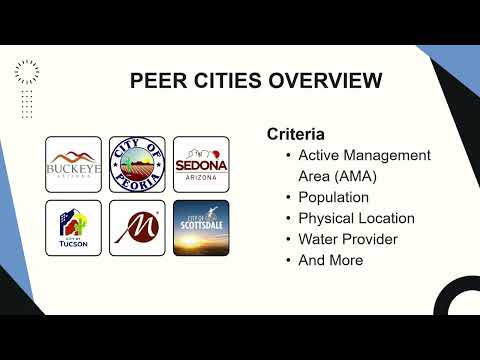
The ASU capstone team — introduced by staff member Dan — said its goal was to “bridge the gap” between the city’s 2030 general plan water goals and what the city has codified. Sawyer, a presenter, told the council the team used a gap analysis, peer‑city benchmarking and an economic model built from 2024 data to estimate how different industries and housing growth could affect local water demand.
The students offered a 20‑page draft of code changes covering nine sections. Key recommendations include adopting the Pinal County AMA plant list for low‑water landscaping, updating the plumbing code to the latest International Plumbing Code, allowing reuse of water in landscaping, defining “water waste” in code (with examples such as required recycling at commercial car washes and hose auto‑shutoffs), requiring drip irrigation for new landscaped areas, prohibiting non‑functional turf and creating a large‑water‑user ordinance to manage high‑consumption businesses.
The team also proposed a staged drought contingency plan and codified rebates (for turf removal and water‑efficient fixtures) to help residents lower outdoor and indoor water use.
To help weigh water impacts against economic benefits, presenters described an Excel‑based Water Adjusted Value Index (WAVY). The spreadsheet combines inputs such as projected jobs, average wages, local procurement and annualized capital investment to compute a ratio of economic productivity per millions of gallons of water used; presenters emphasized the tool is configurable to reflect policy priorities.
The team recommended immediate next steps including a community survey, program development to run any rebate offerings and a dedicated water conservation specialist or champion within city government to implement and coordinate the proposed measures. They also offered a resident‑facing campaign and a mock landing page to consolidate resources (including an existing conservation kit and a See Fix It app link) and make rebate information accessible.
Staff member Dan said he had paused revising the city’s landscape code pending the capstone recommendations and expressed alignment with the team's direction. Council members offered praise and had no substantive technical questions during the session.
The presentation concluded with the students urging the city to treat the recommendations as starting points for public discussion and refinement before adopting any ordinance changes.
AI generated
The text on this page is AI generated. Summaries, highlights, analysis, and video transcripts are all produced from the original source material.
AI can make mistakes, so if you spot one, and we will fix it for everyone.
Note: the source content is unaltered by us. Any content source we link to, be it a video, an audio recording, or a document, is presented exactly as its publisher released it. That publisher is usually a government body, sometimes an individual official or another organisation.