Get Full Government Meeting Transcripts, Videos, & Alerts Forever!
Get email alerts on the Flood Insurance topic
No spam. Unsubscribe anytime.
What East Dundee homeowners should know about flood insurance after Risk Rating 2.0
Summary
State NFIP coordinator explained how Risk Rating 2.0 altered premium calculations and paperwork expectations, stressed continuous coverage to limit premium spikes, and directed homeowners to regional NFIP contacts for specific rate questions.
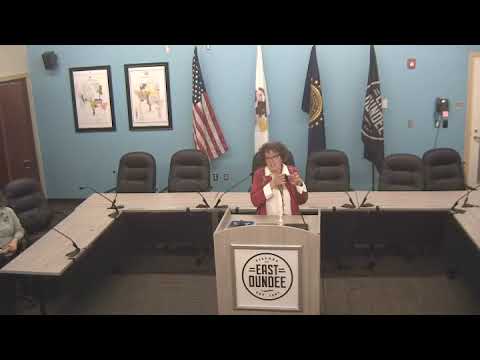
Erin Conley, the Illinois state floodplain and NFIP coordinator, told East Dundee residents that federal changes under Risk Rating 2.0 have shifted how premiums are calculated and reduced the centrality of elevation certificates in some pricing decisions. She said NFIP remains available across East Dundee and that participation gives communities access to mapping, grants and disaster assistance.
Conley advised homeowners that maintaining continuous coverage is one of the most effective ways to avoid sharp premium increases, and she explained options for borrowers whose mortgages require flood insurance. An insurance agent in the room described difficulty getting clear answers since the program’s recent retooling; Conley recommended contacting regional NFIP specialists for case‑specific questions and offered the state contact who supports Region 5.
On coverage details, Conley reviewed that NFIP policies include structural limits (up to NFIP statutory caps), special rules for basements and manufactured homes, and that NFIP policies cannot be canceled (they can be adjusted upward after repeated qualifying events). She also noted that private flood insurance is an alternative in some cases and that the Community Rating System can reduce premiums if the municipality enrolls and completes required outreach and mitigation steps.
Conley said DNR can help communities pursue CRS audits, hazard mitigation grants and other measures that reduce both risk and insurance costs; she provided follow-up contact information for insurance and mapping questions.