Get Full Government Meeting Transcripts, Videos, & Alerts Forever!
Get email alerts on the Pavement Management topic
No spam. Unsubscribe anytime.
Mesa staff outline new pavement‑management software, three‑year laser survey procurement
Summary
Mesa transportation staff told the council they will seek a three‑year pavement management contract that pairs new software with laser roadway surveys to automate condition data, help forecast treatments and extend pavement life; staff said the city seeks to hold average PCI at about 70 and limit costly mill‑and‑overlay work.
Mesa transportation staff presented a proposed three‑year procurement that would buy new pavement‑management software and automated laser surveys covering residential streets this year, collectors next year and arterials in year three. The software, staff said, will automatically ingest survey data to improve multi‑year forecasting for treatments such as fog seal, seal coat, slurry seal and mill‑and‑overlay.
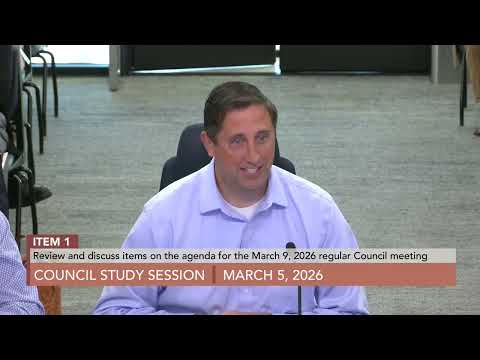
Staff described the city's Pavement Condition Index (PCI) target and lifecycle goals. "We try to keep our pavement condition at 70," a transportation staff member said during the study session, noting the city aims to extend neighborhood and collector pavement life and prioritize treatments that delay costly reconstruction.
Presenters contrasted treatment types and costs: fog seal is a thin preservative coating applied shortly after construction, seal coat is used on low‑speed residential and collector streets to fill medium‑age cracks, slurry seal restores a thicker wearing surface, and mill‑and‑overlay (1–3 inches removed and replaced) is more expensive and typically used for failing pavement or arterials. Staff said the city budgets about $20 million a year for mill‑and‑overlay work performed with engineering oversight.
Councilmembers asked how fiber and other utility trenching have affected patches and schedule; staff said most patches and seals have performed well so far but that the true test will occur over the coming years as neighborhoods with new fiber complete their post‑installation lifecycles. Council also raised questions about in‑house versus contractor costs. Staff said recent equipment purchases have cut some in‑house costs by roughly half for small‑scale milling and repairs, while larger arterial work remains contracted out.
The presentation framed the procurement as a modernization step to reduce manual data entry and create a longer, automated forecast of pavement needs. There was no formal council vote during the study session; staff said the item (listed on the March 9 agenda as item 4E) will return for any necessary action at the regular meeting.