Get Full Government Meeting Transcripts, Videos, & Alerts Forever!
Get email alerts on the Mental Health topic
No spam. Unsubscribe anytime.
Hollis board reviews updated suicide-prevention and response plan grounded in state law
Summary
District staff presented an updated suicide prevention and response plan aligned with RSA 193-J, outlining annual staff training, student education, crisis response protocols and community partnerships; board members pressed for clarity on crisis-response timing and risk-assessment procedures.
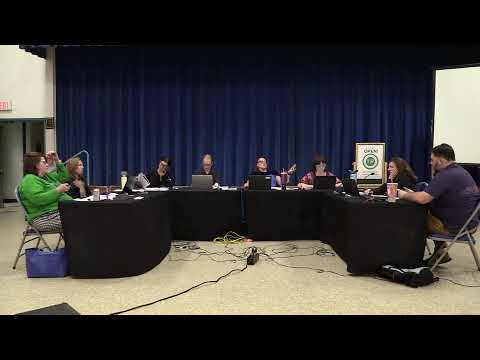
The Hollis School Board heard a detailed presentation May 6 on the district's revised suicide prevention and response plan, which administrators said was designed to meet RSA 193-J requirements and to strengthen school-based supports and community partnerships.
Lauren, presenting the principal/counseling team's work, told the board the plan centers on four elements: annual staff training, student education, crisis-prevention resources and partnerships with community providers. "This plan is reviewed at minimum every two years," Lauren said, adding that staff use VECTOR training that meets RSA 193-J and that each classroom keeps a safety-protocol chart for teachers to reference.
The nut graf: The plan lays out immediate steps for staff if a student expresses intent to harm themselves, including keeping the student in sight, contacting an administrator or school counselor in real time, notifying parents and requiring evaluation by a licensed mental health practitioner before the student returns to school. A re-entry meeting with the school counselor, administrator, parent and student is required to implement recommended supports.
Board members asked how quickly outside crisis resources respond. "It is very quick," Lauren said of the mobile support unit, adding that families also receive referrals to community clinicians and, in urgent cases, emergency departments. On concerns about impulsivity among younger students, Lauren said training addresses impulsive expression separately from clinician-led risk assessment: "We will gather preliminary information in the moment and then share with a clinician," she said, describing it as a "double layer" of assessment.
The presentation also described the district's multi-tiered system of supports (MTSS) for prevention and early identification, and the range of classroom and schoolwide practices (lunch bunches, counseling check-ins, social-emotional lessons) aimed at building relationships and protective factors. Administrators noted the district posts the plan and resource appendix on school websites and will schedule staff follow-ups and periodic internal reviews.
What happens next: The board did not take formal action on the plan at the meeting; presenters said the plan will continue to be reviewed internally and updated at least every two years, with ongoing staff training and community coordination.
Quote: "Every concern is taken seriously," Lauren said. "We follow the established protocols to respond quickly, involve our families, and make sure the students get what they need both inside and outside of school."