Get Full Government Meeting Transcripts, Videos, & Alerts Forever!
Get email alerts on the Vehicle Impact Protection topic
No spam. Unsubscribe anytime.
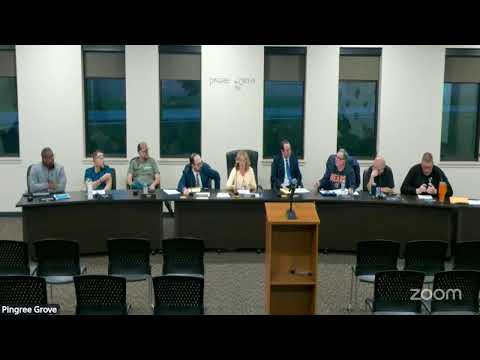
Pingree Grove board backs vehicle-impact protections for new commercial development, defers retroactive mandate
Summary
After hearing staff proposals and safety concerns, the board directed staff to require vehicle-impact protection and to codify a two-foot-candle lighting limit only for new commercial developments, remove industrial users from retroactive requirements, and to wait for state action before pursuing retroactive mandates or a cost-sharing retrofit program.
Village staff presented proposed zoning changes to codify residential lighting limits (two foot candles) and to require vehicle-impact protection (VIP) devices such as bollards or reinforced planters at commercial entrances and where windows are less than 2 feet above grade. Staff said requirements were initially drafted for new developments but that the Planning & Zoning Commission recommended expanding certain protections to existing industrial and commercial users; staff explored the possibility of a cost-sharing program for retrofits.
President Kubak cited a vehicle-ramming incident at a Portillo’s in a neighboring village last summer as part of the impetus for researching VIP standards. She said municipalities in the area, including Sugar Grove, have been considering similar measures. Staff noted pending state legislation and reported that, as of the meeting, the bill had passed the Senate but its final fate was uncertain.
Trustees expressed consistent support for applying VIP requirements to new commercial developments but raised concerns about imposing retroactive requirements on existing businesses given cost and practicality concerns. Staff estimated a single bollard installation could cost $1,500–$2,000 and said roughly 150 devices might be required community-wide if a full retrofit were mandated; trustees also asked that devices be allowed to meet visual and design standards so they can blend with buildings and include reflective elements for nighttime visibility.
The board directed staff to revise the draft so VIP and lighting requirements apply to new commercial developments only, to remove industrial users from the retrofit requirement, and to return with the ordinance at the next meeting after staff updates and in light of any state action.