Get Full Government Meeting Transcripts, Videos, & Alerts Forever!
Get email alerts on the Vacant Property Tax topic
No spam. Unsubscribe anytime.
Committee advances bill to extend vacant-property tax to lots, delays start to 2028
Summary
Baltimore City council committee approved an amendment to Council Bill 250088 to apply a special vacant-property tax to vacant lots, set the rate at four times the standard property tax, and delay implementation to July 1, 2028 while a working group completes inventory and exemption procedures. The amendment passed 5-0 and the bill moves to second reader.
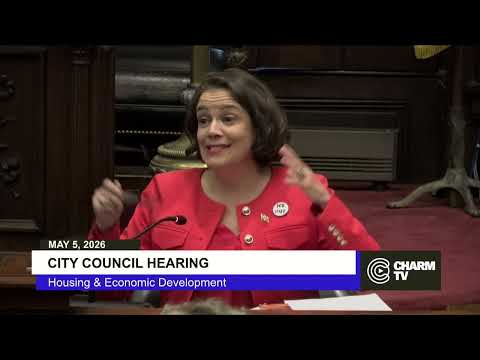
Councilwoman Odette Ramos, sponsor of Council Bill 250088, told the Housing and Economic Development Committee that the bill would expand the city’s existing vacant-structure tax to include vacant lots, establish a subclass for vacant lots and vacant structures and apply a special tax rate to that subclass. Ramos said the bill would also make the special rate permanent by removing a 2029 sunset.
Ramos said the tax’s principal goals are to change property-holder behavior and to increase the number of parcels eligible for INREM (the city’s foreclosure/receivership process). “This is about changing behavior for those holding on to properties to do something with them,” Ramos said, and she described cases where parcel classification errors have caused confusion about whether a site is a vacant lot, a community garden, or a property with a structure.
Ramos proposed and offered an amendment to move the bill’s enactment date to July 1, 2028 and to create a sponsor-led working group of city agencies to complete a vacant-lot inventory and design an exemption/application process. Ramos said the delay was necessary after agencies informed her the work would take longer than expected and she described being “blind‑sided” when the timeline changed late in the process.
A Department of Housing and Community Development representative (recorded in the hearing as Director Keane) said DHCD supports keeping vacant lots in the legislation but needs time to build an exemption and application process that can operate only after legislative authority is in place. Keane told the committee that developing a legally defensible application process, and ensuring it will not create takings or due-process exposure, requires the proposed delay.
A Department of Finance representative told the committee the department stands by its report and supports the amended timeline, echoing the need for an application-based exemption system rather than a blunt, one-size-fits-all approach. Finance officials said earlier city budget assumptions had included a modest revenue estimate from the tax (approximately $3 million annually in early projections) but that the law’s main purpose is to move properties into remediation or INREM rather than to be a large revenue source.
Council members pressed agency staff about data and implementation. Several members asked how the city tracks demolitions and vacant-lot inventories; DHCD staff said the agency has used an “e-demo” system since 2016 and that permit records and other sources can be pulled to produce demolition lists, but acknowledged classification gaps and the need to cross‑reference subdivision and permit data to make the inventory reliable.
Public witnesses described mixed views. Some urged exemptions for community gardens and small nonprofit stewards, warned that a blanket fourfold rate could harm low-income owners or heirs-property cases, and proposed alternative housing programs and targeted remedies. Ramos said those concerns are why the working group must include community engagement and strict criteria for exemptions.
After discussion, the committee adopted the sponsor’s amendment (delay to July 1, 2028; creation of a working group and uncodified language to guide the process) on a 5-0 vote and then voted 5-0 to move Council Bill 250088, as amended, to second reader. Chair James Torrance said a technical citation fix to a building-code reference would be made before second reader.
What’s next: The bill will return for second reader at the next council meeting; the working group the sponsor described is intended to complete the lot inventory, recommend exemptions, and produce the materials needed for the state-level authorizing language and an application process before the amended enactment date.
Quotes from the hearing
“...we are adding vacant lots. It also automatically makes the vacant property tax four times the current property tax rate on vacant properties and vacant lots,” Councilwoman Odette Ramos said. “We need to make more properties available for and eligible for INREM.”
“The only amendment that we’re requesting … is the two‑year implementation schedule,” a DHCD representative said, supporting the delay so the agency can develop a fair exemption process.
Committee action and outcome
The committee adopted the sponsor’s amendment and moved the bill, as amended, to second reader; the amendment passed 5-0 and the motion to move the bill passed 5-0. The record shows the amendment mover and second and the full committee tally.
Reporting note: This account is based solely on the committee hearing transcript and on statements made on the record. Where speakers described agency data or legal constraints, this article reports those claims as attributed to the named speakers.