Get Full Government Meeting Transcripts, Videos, & Alerts Forever!
Get email alerts on the Urban Agriculture topic
No spam. Unsubscribe anytime.
City food-systems coordinator urges land-bank, permitting and hydrant reforms to boost urban agriculture
Summary
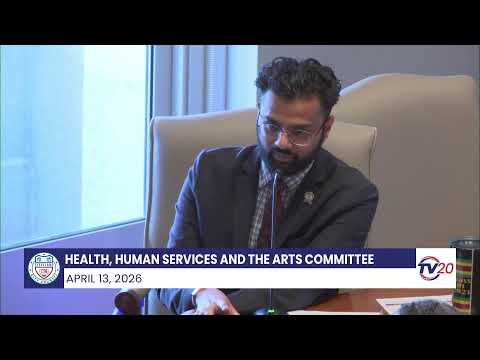
Zeinab Pixler, the city’s Local Food System Strategies Coordinator, briefed the committee on seven priorities from a listening tour — including land and water access, Summer Sprout funding, and special-events permitting obstacles — and asked council to consider policy changes to support community gardens and local food retail.
Zeinab Pixler, the City of Cleveland’s Local Food System Strategies Coordinator, told the Health and the Arts Committee that her office’s listening tour produced seven priorities — land and water access for urban agriculture, transparent city processes, institutional procurement, alternative retail models, workforce development, food rescue/composting and coalition-building — and that those pillars are guiding the department’s work.
Pixler said the city’s land bank historically does not sell lots for urban agriculture, forcing community gardens to operate under leases rather than ownership, which she said undermines long-term investment in community-grown food. "Currently, the city's land bank does not sell land for urban agriculture, which poses a huge food sovereignty issue," Pixler said. She said staff are working with land-bank officials on a policy to allow sales under conditions that would require demonstrated experience and training.
Pixler outlined ongoing programs: the Summer Sprout community-gardening program (previously funded through Community Development Block Grant dollars) is being shifted to general-fund support to allow program expansion; she also described efforts to find long-term operators for the East Side Market while keeping the space active. She identified administrative barriers to small events and markets, saying the city's special-events application treats farmers markets like one-day music festivals and urged a simplified permitting path for smaller community markets.
On infrastructure, Pixler warned that hydrant-permit procedures and fees are opaque for gardeners and urban farms; she said urban farms are typically charged for an estimated seasonal water usage and that the process lacks published guidance. Council members volunteered to draft policy suggestions, seek streamlined permitting options and review hydrant-fee structures. Pixler invited councilors to a July garden walk and offered to share her listening-tour report and newsletter to help inform next steps.
Council members expressed support for policy changes while probing implementation safeguards — including eligibility rules, trial periods and training requirements — to ensure new sales of land for urban agriculture go to groups with capacity to maintain plots long-term.