Get Full Government Meeting Transcripts, Videos, & Alerts Forever!
Get email alerts on the Employee Benefits topic
No spam. Unsubscribe anytime.
MCALLEN ISD benefits team flags rise in large health claims as plan options are reviewed
Summary
Benefits staff told the board that large health‑insurance claims more than doubled year‑over‑year and reviewed stop‑loss structures, carrier comparisons and plan designs (HMO/PPO/EPO) as the district evaluates cost‑management options for 2026.
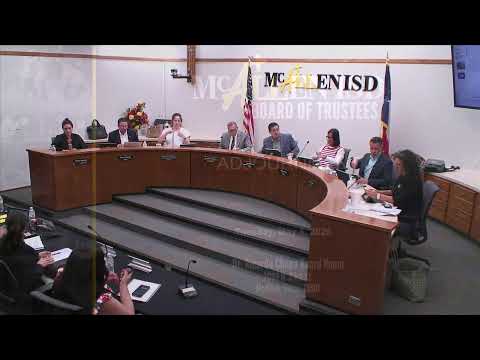
At the budget workshop Miss Karina Perez, presenting employee‑benefits data, told trustees that large claims (defined as claims over $80,000) rose from 21 in 2024 to 38 in 2025, pushing more than $2 million in large‑claim dollars into plan costs. Trustees asked how those 'lasers' and high-cost claimants affect renewals and stop‑loss pricing.
Perez said most employees are on a plan with a $330,000 deductible, though a small number of individuals with prior high costs have higher deductibles or are treated as 'lasers.' She told trustees that the district compared aggregate and individual stop‑loss scenarios and chose an aggregate policy as more cost‑effective for the 2025 renewal.
Presenters showed a first‑quarter comparison of claims under the previous carrier, Blue Cross Blue Shield, and the 2026 carrier, UnitedHealthCare, and noted January figures reflect claim lag and that a fuller picture will emerge as more claims are processed. Trustees asked whether runouts from the previous carrier and January–March 2026 data were fully comparable; staff said November/December runouts from the prior carrier were not included in the initial comparison.
The benefits presentation included plan‑design options: an HMO (lower cost, network and PCP/referral requirements), PPO (more flexibility), and EPO (no referrals but in‑network only); staff also described a two‑tiered hospital network strategy aimed at steering employees toward higher‑value providers to reduce spending by an estimated 5–15%.
Board members asked for more detailed projections and scenarios, including the effect of large claims on renewal pricing, how plan design changes would affect employees at different income levels, and timing for decisions concurrent with the budget calendar.