Get Full Government Meeting Transcripts, Videos, & Alerts Forever!
Get email alerts on the Battery Energy Storage topic
No spam. Unsubscribe anytime.
Douglas County staff outline zoning approach for battery energy storage systems
Summary
Douglas County planning staff updated commissioners on a long‑running text amendment for battery energy storage systems (BESS), highlighting thermal‑runaway fire risks, existing 500‑foot setbacks tied to solar rules, and staff’s recommendation for conditional use permitting with a tiered small/large scale approach.
Douglas County planning staff briefed the Board of County Commissioners on May 6 about a text amendment initiated in July 2024 to address battery energy storage systems (BESS) in the unincorporated county and requested direction on where and how such uses should be regulated.
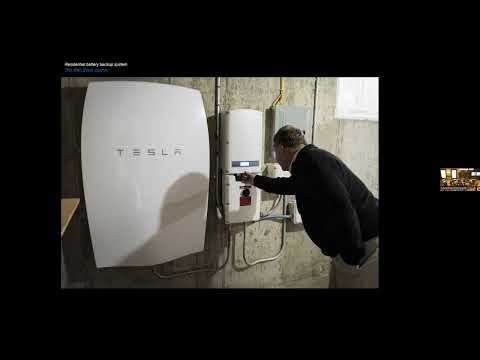
Carl, a planning staff member leading the review, told commissioners that BESS range from small home systems to large, containerized grid‑scale installations tied to substations. He said the primary zoning concern is combustibility risk: "thermal runaway is a chemical reaction that leads to a rapid increase in temperature," and cited recent national incidents and local fire‑district concerns as drivers of the effort. Carl emphasized that "there is no application under consideration. There is no specific site being considered," and that staff were not presenting draft code language at the work session.
Staff described the County’s current regulations for BESS as limited to systems tied to utility‑scale solar; those rules include a 500‑foot setback from an existing residence, compliance with National Fire Protection Association (NFPA) standards, fenced enclosures with self‑locking gates, and a noise limit as measured from property lines or 500 feet. Standalone BESS are not currently listed on the permitted use table, which means any developer proposing a standalone system would trigger the text amendment process.
Based on peer‑community practice, staff said the common regulatory pattern is either to allow BESS in industrial or utility districts or to require a discretionary process such as a conditional use permit (CUP). Staff recommended a tiered approach that treats small, behind‑the‑meter or in‑home systems differently from grid‑scale installations and suggested consolidating BESS, data centers and digital asset retrieval into a single use category only if appropriate mitigation standards can be defined.
Commissioners pressed staff on local infrastructure and emergency response capacity. Carl said he had contacted rural water districts and heard back from several that accommodating uses that could consume "hundreds of thousands of gallons per day" would require significant system upgrades. Staff also noted that many rural fire districts have limited capacity to respond to a BESS thermal event and that model regulations typically require emergency response plans, coordination with first responders and paid third‑party reviews of technical applications.
Staff outlined next steps: continue drafting regulations, coordinate with fire districts, utilities and water providers, then advance proposed text to the Planning Commission and back to the Board for formal consideration. Carl reiterated there are currently no active applications for standalone BESS in Douglas County.
The work session produced no vote; staff will return with draft code language and additional analyses after further outreach and the County’s ongoing Clarion diagnostic is presented.