Get Full Government Meeting Transcripts, Videos, & Alerts Forever!
Get email alerts on the Housing topic
No spam. Unsubscribe anytime.
Delray Beach adopts accessory dwelling unit rules for targeted neighborhoods
Summary
After a multi‑year study and neighborhood outreach, the commission adopted rules permitting accessory dwelling units (ADUs) in specified areas, with owner‑occupancy or deed‑restricted workforce rental, minimum parking and design conditions to protect neighborhood character.
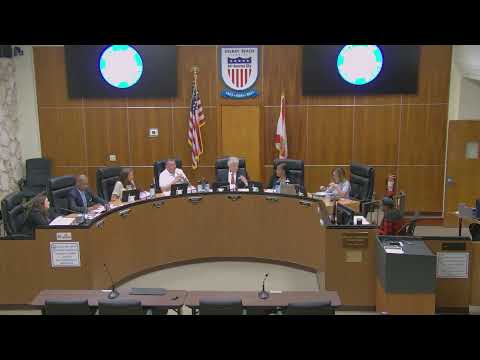
The Delray Beach City Commission on April 7 adopted an ordinance authorizing accessory dwelling units (ADUs) in designated neighborhoods following staff studies and planning board review.
The ordinance allows detached ADUs to be built behind or beside single‑family homes in specified areas and exempts ADUs from density calculations. Key conditions include owner‑occupancy or a homestead requirement paired with deed restrictions for workforce rentals, a minimum of one on‑site parking space (with legal access via alley when present), independent entrances for ADUs, and design setbacks and massing intended to preserve neighborhood character. The planning board recommended approval (6‑2) after a study that examined lot sizes, alleys and parking configurations in the northwest and southwest neighborhoods.
Planning staff said the rules were designed to be implemented neighborhood‑by‑neighborhood rather than citywide, and that the city will use deed restrictions and permit review to enforce rental income and duration limits where workforce housing covenants apply. "When you build workforce housing, there's a deed restriction," a planner said during the public hearing.
Public comment included praise from local advocates and residents who described the ordinance as a practical step to expand housing options without wholesale rezoning. The commission voted unanimously to adopt the ordinance on second reading.
Staff said implementation details (deed‑restriction language and enforcement approach) will be finalized with the city attorney and that the initial rollout will focus on areas identified in the ADU study and CRA efforts.