Get Full Government Meeting Transcripts, Videos, & Alerts Forever!
Get email alerts on the Special Education topic
No spam. Unsubscribe anytime.
External review finds mixed results for special education and flags high transport costs
Summary
An external review presented July 16 found Pajaro Valley’s special-education enrollment stable but uneven staffing; reviewers flagged heavy reliance on contracted transportation due to driver shortages and recommended audits of para assignments, case loads and clearer budgeting for special-ed transport.
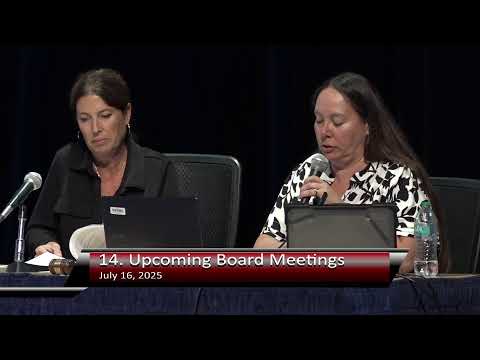
An independent review presented to the Pajaro Valley Unified board on July 16 found that the district’s special-education program shows strengths — including widely used restorative practices and an inclusive approach — but also has uneven staffing and high transportation costs driven by a driver shortage and heavy use of contracted carriers.
FCMAT-style reviewers Carolyn Beno and Tim Perrvis told trustees the district’s special-education enrollment is not increasing as in many districts and that the district has made progress on inclusive placements and PBIS (positive behavior interventions and supports). "Overall your special-ed enrollment is decreasing," Beno said, which the review described as a potential positive sign when it reflects effective general-education supports.
At the same time the team highlighted uneven staffing patterns: some programs appear overstaffed relative to statewide norms (instructional assistants and some related-service positions), while other critical certificated specialties — notably teachers for deaf and hard-of-hearing students — may be undersupplied. Reviewers urged the district to audit para assignments and one-to-one aide placements and to examine whether some aides reduce student independence.
On transportation the reviewers flagged unusually high contracted costs. The district currently transports roughly 494 students under special-education IEPs; about 29 of those rides use non-yellow-bus vehicles. Perrvis said driver shortages and days with high driver absenteeism forced the district to rely on third-party transportation-network companies (TNCs) and contractors for one-to-two-student trips, raising per-student costs.
"You're transporting about 14.9 students per regular route — that is in line with statewide averages — but special-ed routing is costly because many runs are one- or two-student trips with TNCs," Perrvis said. Review recommendations include separating special-education transport costs in the budget for better cost tracking, increasing recruitment and retention of CDL drivers, and evaluating whether additional in‑district routes could lower contracted vendor spending.
The review recommended steps to strengthen instruction: wider adoption of Universal Design for Learning and more targeted professional development for instructional assistants and behavior technicians; it also suggested deeper local analysis of why English learners are underrepresented among identified special-education students.
Board members and union representatives pressed the team on where cost savings could be found and urged quicker action on driver recruitment and on better support for classroom teams. Trustee feedback included requests that the district track special-education transportation and program costs separately and develop a replacement policy for aging fleet vehicles.
What’s next: Reviewers provided written recommendations and cited resources for root-cause analysis; the board asked staff to return with implementation steps and a timeline for recruitment and budget tracking.