Get Full Government Meeting Transcripts, Videos, & Alerts Forever!
Get email alerts on the District Goals topic
No spam. Unsubscribe anytime.
Carlsbad Unified trustees review staff-recommended goals for 2025–26; ask staff to refine measures
Summary
Trustees reviewed three districtwide goals and staff-recommended success indicators for 2025–26, directed staff to refine several measurement items (notably cohort growth and assessment metrics), and asked for revised language and cost/feasibility reports for May.
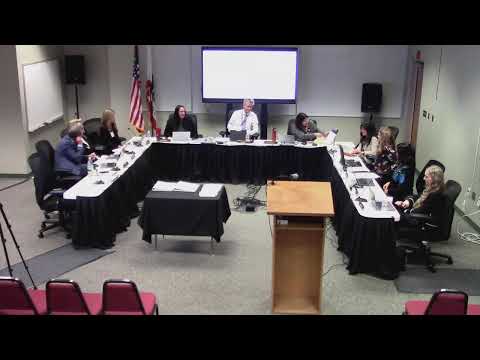
Carlsbad Unified trustees met in an informational workshop to review staff recommendations for the district’s 2025–26 goals and success indicators and to provide direction on revisions. The meeting, led by board president Rawlings, was discussion-only; trustees did not take formal votes but used a consensus process to ask staff for follow‑up work.
Staff presented three longstanding district goals—academic growth and proficiency; alignment of learning to state standards in a safe, fiscally sound environment; and engagement of families, staff and community—and explained how success indicators attach measurable targets to those goals. Staff emphasized the distinction between board-set goals and the state-required Local Control Accountability Plan (LCAP), noting that some state metrics are required in the LCAP even if the board does not list them as top priorities.
Trustees raised questions about individual success indicators and the metrics behind them. On academic-growth measures (success indicators 1.1 and 1.2), several trustees said they want to move beyond reliance on a single universal screener and explore cohort-based tracking and multiple-measure approaches; staff was directed to draft alternative language and feasibility options for the board’s May meeting. Trustees also asked staff to draft a cohort-focused replacement or revision for success indicator 1.4 (currently framed as a decrease in the percentage of students not meeting standards) so that it measures movement between performance bands over time, while retaining 1.3 as the year-to-year proficiency metric.
The board discussed and asked staff to refine other measures, including clearer Kelvin survey questions to distinguish physical campus safety from social‑emotional safety and to explore linking Kelvin self-report data with discipline entries in Aeries. Trustees unanimously requested historical chronic‑absence data and asked staff to disaggregate absenteeism by elementary, middle and high school so the board can set realistic, level-specific targets.
Staff also received direction to draft a local-assessment indicator to track growth for English learners, socioeconomically disadvantaged students and students with disabilities; to develop a measurable proposal on healthy-food/wellness targets in consultation with the district food-services director and the wellness committee; and to cost out models for expanding MTSS support in high schools, exploring district social-worker services, and adding counselors. All these items were referred back to staff for return in May or as part of the April 23 agenda where appropriate.
The board adjourned at 9:27 p.m.; trustees will reconvene April 23, 2025.