Get Full Government Meeting Transcripts, Videos, & Alerts Forever!
Get email alerts on the Consumer Protection topic
No spam. Unsubscribe anytime.
Members press witnesses on growing fraud schemes that devastate seniors and other residents
Summary
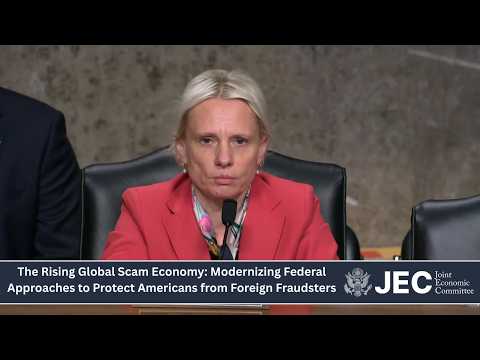
At a Joint Economic Committee hearing, lawmakers described large-scale scams — including an elderly constituent allegedly defrauded of $180,000 — and pressed witnesses from enforcement and consumer agencies on better reporting, coordination, and victim outreach. Witnesses said agencies receive millions of reports but face resource limits for one-on-one responses.
Representative Sparks told the Joint Economic Committee that constituents in his district have lost life-changing sums to scams, including an elderly person he said was defrauded of $180,000 and another who withdrew $150,000 after being convinced by scammers. "These people are devastated," Sparks said, and he urged Congress to consider more coordinated, dedicated units and procedures to assist victims and pursue prosecutions.
Mr. Heeb, addressing the committee, said federal agencies receive a high volume of reports and stressed the first practical step for victims is to report incidents. "There are thousands of complaints that come into the FBI every day, as well as to the Federal Trade Commission," he said, adding that complaint repositories such as IC3 and consumer complaint channels allow agencies to track scheme trends, identify victims and prioritize investigations.
An unnamed witness who testified later described how investigative operations have relied on digital evidence seized from alleged scam compounds. The witness said investigators were able to extract contact information from phones recovered in such operations and then reach out to victims who had reported issues, sometimes revealing for the first time that they had been defrauded.
Ms. Greisman told lawmakers the scale of incoming reports limits the ability to provide individualized assistance. "Receiving 3 million consumer reports a year, it is simply not practicable to do a one on one," she said, describing the agency's focus on public education and resources and pointing to models that offer one-on-one help, such as the Better Business Bureau. She said education materials and coordinated use of available resources (FTC, AARP and others) are crucial to prevention and to supporting investigations.
Lawmakers pressed witnesses for concrete ideas to improve outcomes for victims, including more dedicated investigative resources and clearer pathways for constituents to get help. Witnesses emphasized that centralized reporting helps agencies spot large schemes and allocate resources, but they also acknowledged that prosecutions can be difficult and that resource constraints limit individualized outreach.
The committee heard detailed descriptions of how complaint data and investigatory steps (including device seizures) have led to victim identification and have supported cases, and members concluded by urging continued interagency coordination and exploring legislative options to strengthen victim assistance. The hearing proceeded to additional testimony and questioning.