Get Full Government Meeting Transcripts, Videos, & Alerts Forever!
Get email alerts on the Criminal Justice topic
No spam. Unsubscribe anytime.
Court hears arguments over missing unanimity instruction in Miranda v. State
Summary
The Utah Court of Appeals heard competing arguments over whether the trial court's failure to give a specific unanimity instruction prejudiced a conviction in Miranda v. State; the State urged harmless-error review while appellant's counsel argued the record allowed mixing-and-matching of incidents and that the quick verdict undermines confidence. The court took the case under advisement.
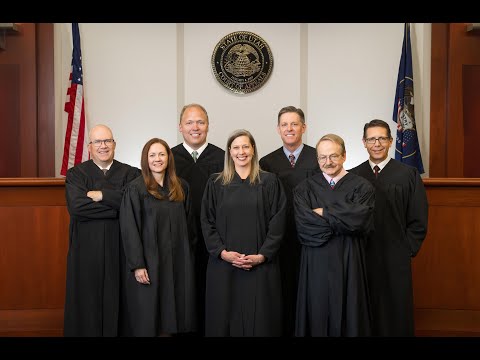
The Utah Court of Appeals heard oral argument in Miranda v. State over whether the trial court’s failure to give a specific unanimity instruction (requiring jurors to agree on the same act for each count) prejudiced the defendant’s convictions.
Christopher Ballard, arguing for the State, told the panel the defense framed guilt as an "all-or-nothing" proposition and that nothing in the evidence or defense gave the jury a basis to find that only some acts occurred. Ballard conceded a specificity instruction could have been given but argued the omission was non-prejudicial because the record lacked material inconsistencies in the victim’s testimony, the jury convicted on all nine counts and returned a verdict quickly. "Just the fact that the jury could have parsed the evidence in a particular way doesn't automatically demonstrate prejudice," Ballard said, urging harmless-error review under controlling precedent.
Appellant counsel (recorded as 'Talifer') countered that the State's evidence described more alleged incidents than there were counts, trial instructions did not tie particular acts to specific counts, and several aggravating factors increased the risk that jurors could mix and match incidents to reach guilty verdicts. "The state's evidence did not tie any specific act, any specific incident, any specific location to any one of these nine counts," Talifer told the court, arguing those facts distinguish this case from others where courts found no prejudice.
Panel members pressed both sides on how the jury would have actually parsed competing accounts in the jury room, whether prosecutor narrowing in closing argument is sufficient to protect against non-unanimous verdicts, and how to weigh a fast, 90-minute verdict that convicted on all counts. Ballard responded that the prosecutor in closing had identified a limited set of incidents and locations for the aggravated-sexual-abuse counts and for the rape counts, citing portions of the trial record and arguing that narrowing supports confidence in the verdict.
The court asked detailed questions about the applicable prejudice standard and whether the postconviction court erred by relying on precedent that presumes prejudice in preserved error contexts. After rebuttal from the State, the panel took the matter under advisement and said it would issue an opinion as soon as practicable.
The case raises an increasingly litigated issue in appellate courts: when multiple alleged incidents exceed the number of counts, and when testimony describes frequent abuse across time, whether the absence of a special unanimity instruction requires reversal or can be harmless where other record features (prosecutor narrowing, lack of material inconsistencies, quick verdict) support confidence in the jury’s verdict.