Get Full Government Meeting Transcripts, Videos, & Alerts Forever!
Get email alerts on the Public Health topic
No spam. Unsubscribe anytime.
Iowa State presenter outlines LEAP obesity-prevention work for Muscatine City
Summary
Ally Berkkey of Iowa State University briefed the Muscatine City Council on LEAP, a CDC-funded five-year program using policy, systems and environmental strategies to expand access to healthy food and safe active-transportation options in counties with high adult obesity rates.
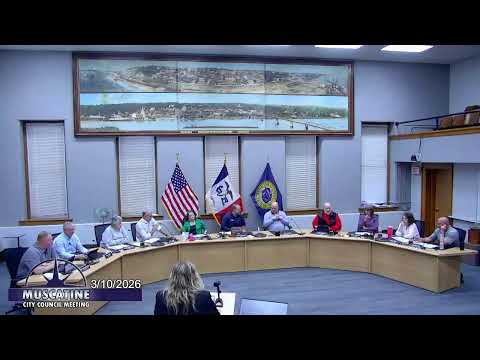
Ally Berkkey, an extension specialist with Iowa State University Extension and Outreach's High Obesity Program, told the Muscatine City Council on March 10 that the federally funded LEAP initiative focuses on changing policies and environments to reduce adult obesity.
Berkkey said LEAP (Leveraging Activities and Partnerships to Address Obesity) is a five-year CDC grant program that partners land-grant universities with communities to implement policy, systems and environmental strategies in counties with adult obesity rates of 40% or greater. "We focus on policy systems and environments over treating the individual," she said. "Changing policies, not people is kind of our motto." She urged local decision makers to join coalitions to expand access to fresh produce and to safe walking and biking routes.
Berkkey described three core strategies: improving access to healthy foods through measures such as farmers-market incentive programs and Double Up Food Bucks (which can double purchases of fruits and vegetables up to $15 per day), raising food-service standards at venues and distribution sites, and expanding safe opportunities for physical activity through pop-up bike lanes, shared-use agreements and policies like complete streets. She cited local pilots and outreach work including walk audits and children's "Power of Produce" events.
On impact, Berkkey said LEAP partners in the region reported that more than 85,000 people gained increased access to safe physical activity last year and that expanded produce-incentive programs in three counties resulted in over 200 residents buying more fruits and vegetables. She pointed to Tipton as a success story, where a walk-audit led a council to apply for a safe-routes grant and leverage more than $250,000 to build a shared-use sidewalk to school.
Council members asked technical questions about the program map color codes, grant-writing support and eligibility. Berkkey said LEAP staff identify funding opportunities and help local partners navigate deadlines and application logistics but do not perform grant writing for municipalities. She offered to follow up on outstanding map and data questions and left contact information and QR codes for further materials.
Council members applauded the presentation and acknowledged LEAP's local partnerships and potential tools for the city to expand produce access and active-transportation options. The council did not take any formal action on LEAP at the meeting.
The next agenda item was a staff briefing on the city's public housing agency and housing-authority options.