Get Full Government Meeting Transcripts, Videos, & Alerts Forever!
Get email alerts on the General Plan topic
No spam. Unsubscribe anytime.
Residents urge Fruit Heights council to reopen general-plan process, oppose golf-course redevelopment
Summary
Residents and citizen groups told the council the 2023 general plan did not receive meaningful public notice and urged deletion of a golf-course redevelopment concept, citing sparse survey responses, petitions and concerns about the city's outreach and legal process.
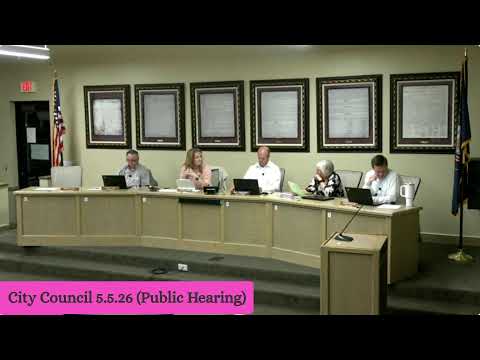
Dozens of Fruit Heights residents told the City Council on May 5 that the city's recently adopted general plan did not reflect meaningful public input and urged officials to remove a redevelopment concept for the Davis Park golf course.
"We were told this plan reflects community input," Denise Rally said during public comment, "but when you look at how the input was gathered, a different picture emerges." Rally said open houses were promoted chiefly on Facebook and sometimes not included in official notices, and she asked whether the plan had been legally adopted with proper notice.
The concerns coalesced around three points: low participation in the city's engagement tools, evidence that key stakeholders and advisory groups had limited involvement, and apparent emphasis on revenue-generating redevelopment options. Tech executive Kurt Williams and others compared the city's engagement metrics with privately run efforts, saying the city questionnaire returned about 15 responses while community-led surveys collected hundreds. "Fifteen responses in a city of roughly 6,000 residents is not a mandate," Kurt Williams said.
Several speakers cited presentations by the plan's consultant, Landmark Design, which presented multiple concepts for the golf course, including one projected to produce higher long-term revenue. "The plan treats redevelopment as a major opportunity," Manda House said, quoting consultant notes and questioning whether financial incentives had driven the golf-course inclusion.
At the same time, speakers who attended a briefing with state MIH (moderate income housing) staff said cities of similar size can meet state reporting requirements with a set of feasible strategies that do not require redevelopment of existing open space. "There is no requirement for actual unit counts," Frank Lever said, summarizing the guidance he received, and noting smaller cities often meet obligations by demonstrating realistic progress on multiple strategies.
Residents also raised environmental and safety concerns tied to potential redevelopment, including a cited assertion that converting the golf course could raise local temperatures and traffic, increasing infrastructure and maintenance costs.
City officials did not adopt policy changes during the public comments. Several council members and staff said the general plan can be revisited through the planning-commission process and that council direction or ordinance changes could follow. Mayor noted the council may consider rules of procedure to clarify how items reach the agenda; councilmembers said they would consider requests to examine the plan further and share city comments with regional planners as appropriate.
Next steps announced at the meeting included follow-up opportunities: councilmembers said staff would provide further material on public-notice records and that the planning commission could be asked to reopen or amend portions of the plan. Residents who presented petitions and alternative survey data urged the council to commission an independent public-engagement review and to remove the golf-course redevelopment concept until public process questions are resolved.