Get Full Government Meeting Transcripts, Videos, & Alerts Forever!
Get email alerts on the Zoo Asset Preservation topic
No spam. Unsubscribe anytime.
Minnesota Zoo urges $6M in additional state repairs, cites safety risks and aging hospital
Summary
Minnesota Zoo officials told the Senate Capital Investment Committee they face a roughly $78 million deferred‑maintenance backlog and rising staff incident rates, and asked lawmakers to add $6 million in asset preservation to the governor’s $4 million recommendation to renovate the zoo’s oldest animal hospital and related systems.
John Frawley, the Minnesota Zoo’s head veterinarian and animal-health director, told the Senate Capital Investment Committee on March 10 that the zoo is carrying a large deferred‑maintenance backlog that threatens staff and animal safety and undermines operations. "We have among the worst facility condition ratings of all state agencies," Frawley said, adding that about one‑third of the zoo’s 125 structures are in crisis condition and the backlog is roughly $78 million.
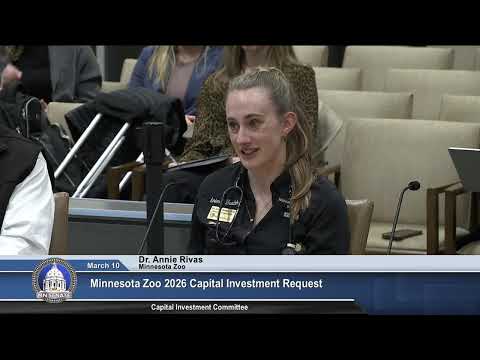
Dr. Reavis, the head of the zoo’s animal health program, described recent on‑the‑job injuries and near misses that staff have experienced while working in aging facilities. "The 6 million dollars in asset preservation is urgently needed to fund this renovation of a building’s envelope systems and workspaces and to remove asbestos," Reavis said, warning that without those renovations the zoo’s new animal hospital cannot operate as intended.
Officials emphasized the zoo’s hybrid funding model: it receives about one‑third of its support from the state, while two‑thirds must be raised through earned revenue and fundraising. Frawley said the zoo attracts roughly 1.4–1.5 million visitors a year and that aging infrastructure both raises safety risks and threatens the zoo’s ability to retain specialized staff.
Committee members probed project specifics. Reavis said the new hospital wing would add about 10,000–13,000 square feet to the existing 28,000‑square‑foot complex and would allow the zoo to provide more overnight intensive care and on‑site surgical capability, reducing the need to transport animals offsite for some procedures. Officials said the agency has privately raised more than $12 million toward a larger hospital project but still faces a shortfall; the current ask supplements the governor’s $4 million recommendation with an additional $6 million request for asset preservation to renovate the oldest hospital building and adjacent systems.
Senators asked how the zoo prioritized its larger $30 million asset‑preservation list and what would happen if only the governor’s $4 million is approved. Frawley said the zoo has prioritized projects that protect visitors and revenue‑generating spaces as well as back‑of‑house infrastructure that directly affects staff safety. Reavis warned that staff recruitment and retention are contingent on visible progress: "If this project does not continue to move forward, they are constantly getting recruited," he said.
The committee did not take a vote on the request; members asked for additional prioritization documents and cost breakdowns to be provided to the committee staff.