Get Full Government Meeting Transcripts, Videos, & Alerts Forever!
Get email alerts on the Public Safety Funding topic
No spam. Unsubscribe anytime.
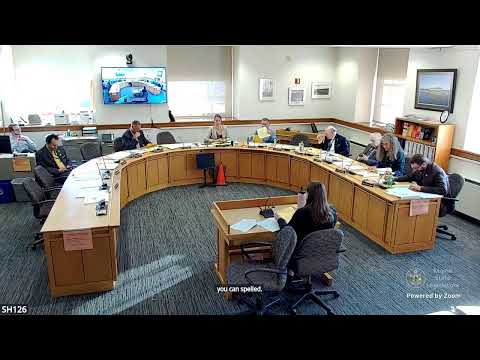
Transportation panel reviews supplemental highway allocations and new state police staffing tied to risk‑protection law
Summary
The Joint Standing Committee on Transportation reviewed a package of supplemental allocations transferring several state police positions into a 65% general/35% highway funding split, staff for forensic testing and a mobile crime‑lab unit, and reclassifications. Law‑enforcement witnesses warned of service risks tied to urgent 'red flag' orders under the extreme risk protection framework.
The legislature’s Joint Standing Committee on Transportation on Tuesday reviewed a supplemental‑appropriations package that shifts several public‑safety personnel costs between programs and provides funding for forensic capacity and tactical staff.
Suzanne Vneck of the Office of Fiscal and Program Review walked members through the initiatives, including transfers that would move detective, lieutenant and sergeant positions into the main state police program under a 65% general fund/35% highway fund split; a separate initiative funds forensic positions and a mobile office unit for the crime lab. The committee was told some of the items had already been recommended to the Appropriations and Financial Affairs (AFA) Committee, while others were still pending.
The package includes funding described as necessary for implementing the Extreme Risk Protection Act: reference materials discussed an expansion of a tactical assistance team and additional specialist positions. Commissioner Mike Sster of the Department of Public Safety explained the operational concern behind those requests, saying the department fielded 615 "yellow flag" activations in 2025 and that a smaller number of "red flag" orders present far greater officer‑safety risk because they require in‑home service within 24 hours. "In a red flag scenario, an individual is not in protective custody…we are cold knocking on the door to say, ‘Hey, we’re here with an order,’" he said, describing why additional tactical capacity and mobile support are being requested.
The committee discussed funding splits and savings, with members asking for clarity on which positions are 100% highway funded and which fall under the 65/35 model. Vneck and department officials described several reclassifications as management‑initiated changes that move incumbents between cost centers rather than creating net new headcount.
Lawmakers also questioned a proposal that would lease a mobile office (described by a DPS official as "literally a conx box essentially to work out of") for forensic testing to ease congestion in a crowded crime lab. Officials said the unit is meant to provide workspace for analysts and equipment, not as a camper‑style roving laboratory.
The committee scheduled follow‑up language work for its next session; members asked departments to provide more precise cost allocations and to confirm which items AFA had already acted upon.
The hearing was informational; no funding votes were taken during Tuesday’s meeting.
Looking ahead, staff said the initiatives will return to committee for final language and a vote at the additional work session the committee scheduled for Thursday.